EKU is building a medical school
The proposed College of Osteopathic Medicine will address the statewide shortage of primary care physicians

Doctors who train in Kentucky will practice in Kentucky.
That's the thinking behind Eastern Kentucky University's recent announcement it is building a medical school at its main campus in Richmond to help address a shortage of primary care and other physicians statewide. The first class of EKU-trained doctors is expected to graduate in the Fall of 2035.
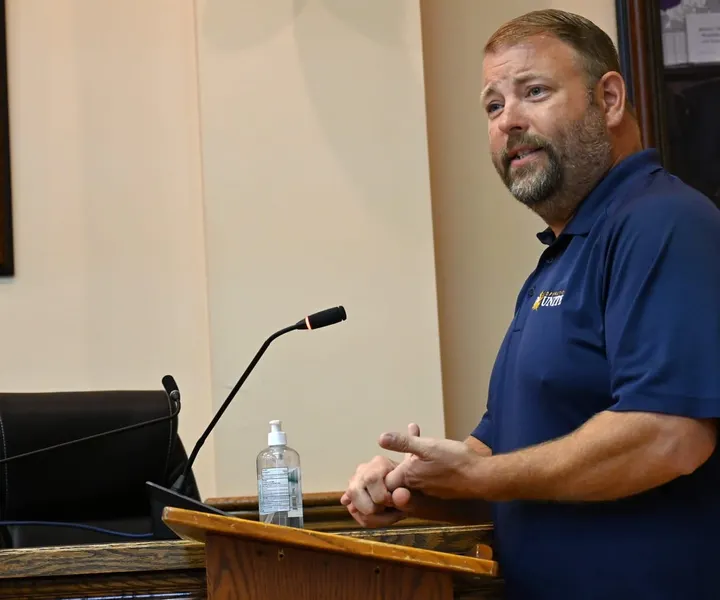
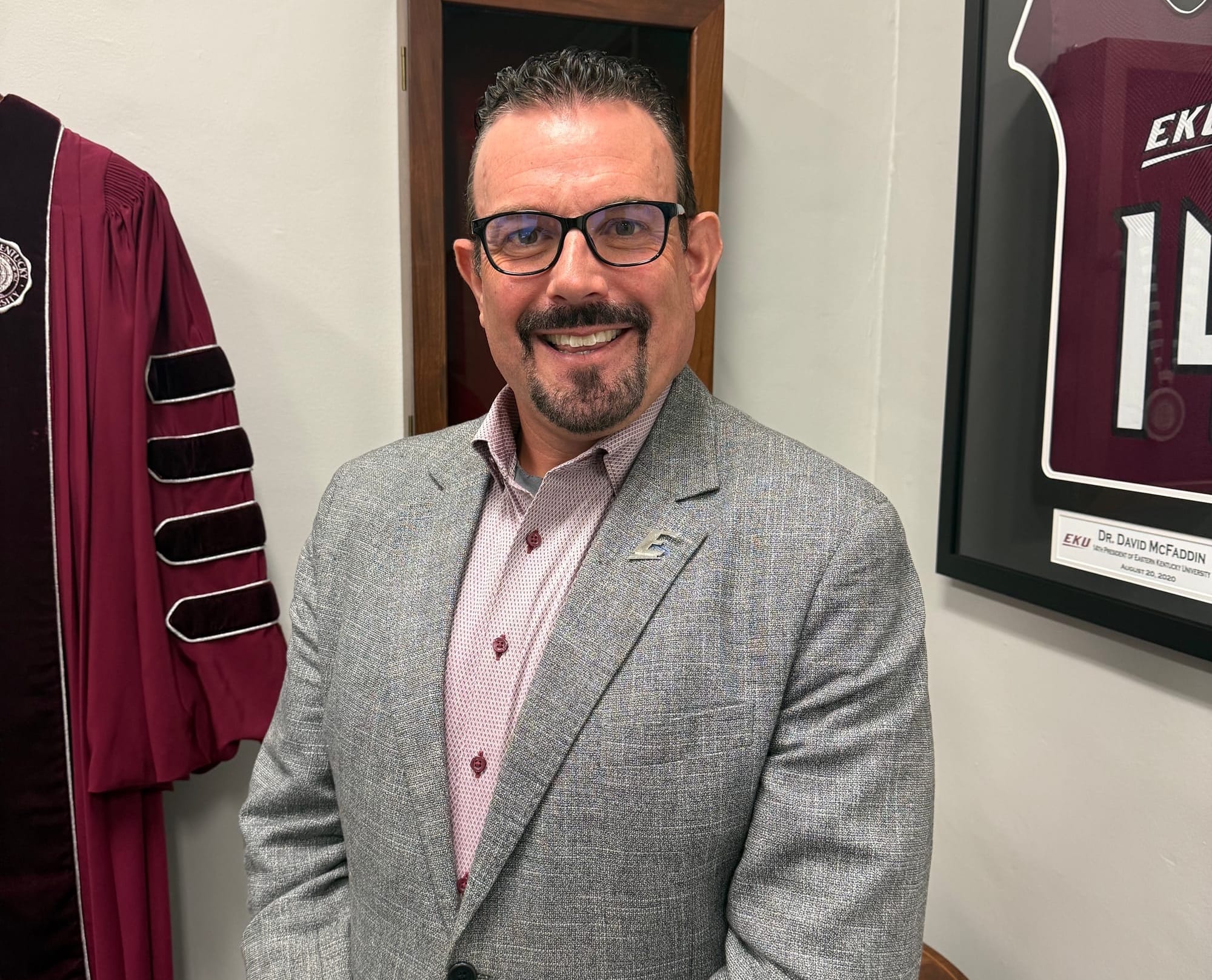
“EKU doesn’t need a medical school to be a successful university,” EKU President David McFaddin, EdD, MBA, told The Edge in an interview. “But adding a medical school to a successful institution with over 120 years of really outstanding educational outcomes—I think it is as sure of a thing as you can get, to say it’s going to make a positive difference in our communities and in our state.”
Statewide physician shortage
There are 6,335 primary care physicians across the Commonwealth, according to KFF, a health policy research nonprofit based in San Francisco, Calif., but nearly all of Kentucky’s 120 counties need more doctors.
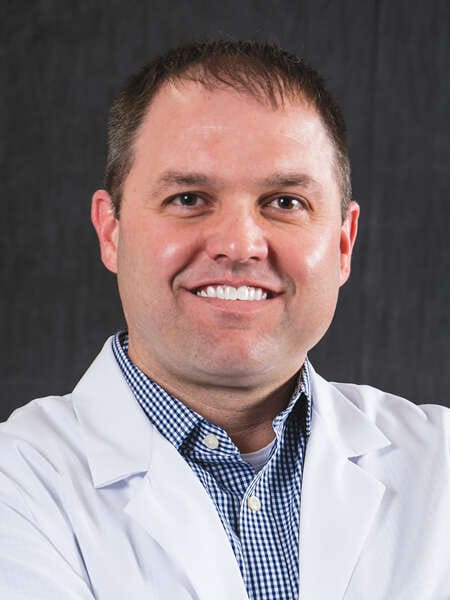
“In real terms, that might as well be 100% [of counties]," Dustin Devers, DO, Chair of EKU’s proposed College of Osteopathic Medicine Advisory Committee, told The Edge in an interview. “They all feel it. Even the 6% [of counties] that may not fall into that category, they still feel it. It is an overburden to the physicians who are in those communities already. Everything suffers when there’s a lack of physicians.”
A report from state health and family services issued last year, claims that by 2030, Kentucky will need 3,000 more doctors, including specialists, to meet the state's growing gap in care, driven in part by older physicians retiring, and also partly by shifts in population centers.
To address the crisis, a new state law went into effect this summer, loosening regulations on licensure of foreign-trained physicians, in the hopes of enticing them to practice in Kentucky, particularly in the most rural areas of the state where physician shortages are most keenly felt.
That's against a backdrop of a coming nationwide shortage of primary care physicians. The shortage is expected to reach more than 86,000 just a decade from now, according to a report from the American Association of Medical Colleges.
Devers says he believes that doctors who train in Kentucky are more likely to stay here to pursue their careers. Survey data from the AAMC support Dever's observation. That organization found that 55.7% of those who completed their residency from 2015 to 2024 stayed in the state where they trained. In Kentucky, it's about half and half: during those same years, 50.8% of those who completed their residency in-state continued to practice here. That's up from 42% in 2023.
Devers, originally from Alabama, is one of those doctors who stayed in the Commonwealth after graduation. A family medicine physician with the Baptist Health Medical Group in Richmond, he received his degree from the Kentucky College of Osteopathic Medicine at the University of Pikeville in 2004.
EKU's program will award a medical degree known as a DO–a Doctor of Osteopathy. Physicians with DOs are licensed the same way as physicians with an MD–Medical Doctor—degree. The difference between the two has narrowed over time, but is centered on differing philosophies. Those with DOs take a "whole-person" approach, while those with MDs are trained to think in terms of "specialties". Both traditions are evidence-based.
“Regionally, [osteopathic medicine] probably makes more sense simply because most osteopathic schools have a heavy emphasis on primary care,” said Devers.
'Only so many seats'
Another limiting factor on meeting the state's need for primary care is that there are only so many available seats for up-and-coming physicians. This means EKU is poised to help expand the number of opportunities for doctors to train and stay in the Commonwealth.
In 2024, the combined number of medical students that graduated in Kentucky was 464, according to KFF. The three medical training programs currently in the state include Devers' alma mater at the University of Pikeville, the University of Kentucky College of Medicine, and the School of Medicine at the University of Louisville.
“EKU is doing a great job in educating a lot of healthcare professionals, but 'physician' is not [currently] one of those things,” McFaddin said in the interview.
At present, multiple health science degrees are available from EKU’s College of Health Sciences, including in nursing, environmental and public health, administration and medical sciences, occupational science/occupational therapy, and exercise and other sports sciences.
“We graduate a lot of healthcare professionals who leave here with undergraduate, graduate, and doctoral degrees," McFaddin said.
Having a fully accredited medical school on campus will tie together all of the many health science degree programs into one setting, similar to the real world where EKU graduates will eventually practice, he said.
Frankfort's blessing
State lawmakers have already earmarked $50 million for EKU’s osteopathic medicine program, although $42 million is still in escrow, according to Brad Hall, EKU’s Chief Medical Strategic Partnership Officer.
“We’re really fortunate that they have leaned in with us on this project and appropriated those dollars,” said Hall. “Those will put us ahead of the game.”
Hall said there are still some internal processes to go through with academic programs and approvals, including notifying accrediting agencies, including the Commission on Osteopathic College Accreditation and asking to be approved for national accreditation.
“We’ve gone through the Council of Postsecondary Education with an initial curriculum and the program approval,” said Hall. “Now we’re working on a building, facilities, whether that’s new or a remodel, we’re still assessing.”
Hall said the next steps are to use the available $8 million in state funds to get the medical school accredited and to recruit a dean and associate dean. Meanwhile, combining all health science degree programs into one centralized so-called "health innovation center" is another top priority through 2028.
Leaders in Frankfort also have already amended the relevant state statute to allow EKU to offer the doctor of osteopathic medicine degree required for licensure.
McFaddin said that although previously in his career he has worked with state policymakers, helping bring the medical school to fruition is the first time he has engaged Frankfort in something so “transformational".
“The legislative support is so tremendous because it means that, one, they acknowledge what we’ve seen, and two, that they believe in what we’re doing and that they believe that we can do it,” McFaddin said.
Whitney McKnight contributed to this story.
Sign up for The Edge, our free email newsletter.
Get the latest stories right in your inbox.