Board of Adjustments tables solar farm vote
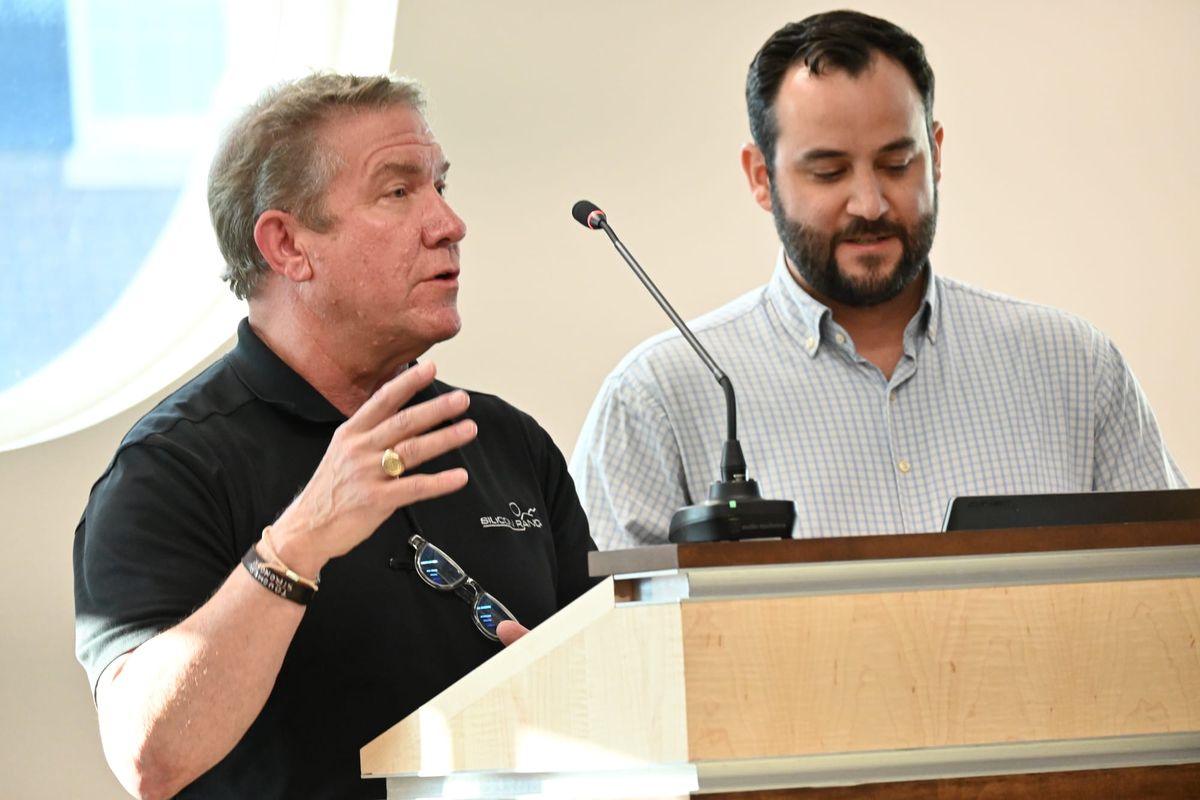
MADISON COUNTY—The Board of Adjustments unanimously voted to table a conditional land use permit that would allow a solar farm to be built on farmland after a two-hour public hearing on Thursday night.
Silicon Ranch Corp., one of the nation's largest independent energy producers, plans to invest $80 million to build a 53-megawatt alternating current solar farm on about 830 acres off Crooksville Road.
The development site stitches together nine different properties, two of which Silicon Ranch now owns. The other seven have been optioned, according to Bob Corney, Silicon Ranch's head of public affairs.
The BOA hit pause on the project until the company provides concrete data about potential impacts on property values and wildlife. The Board also wants a list of community benefits and purchase price information for each property.
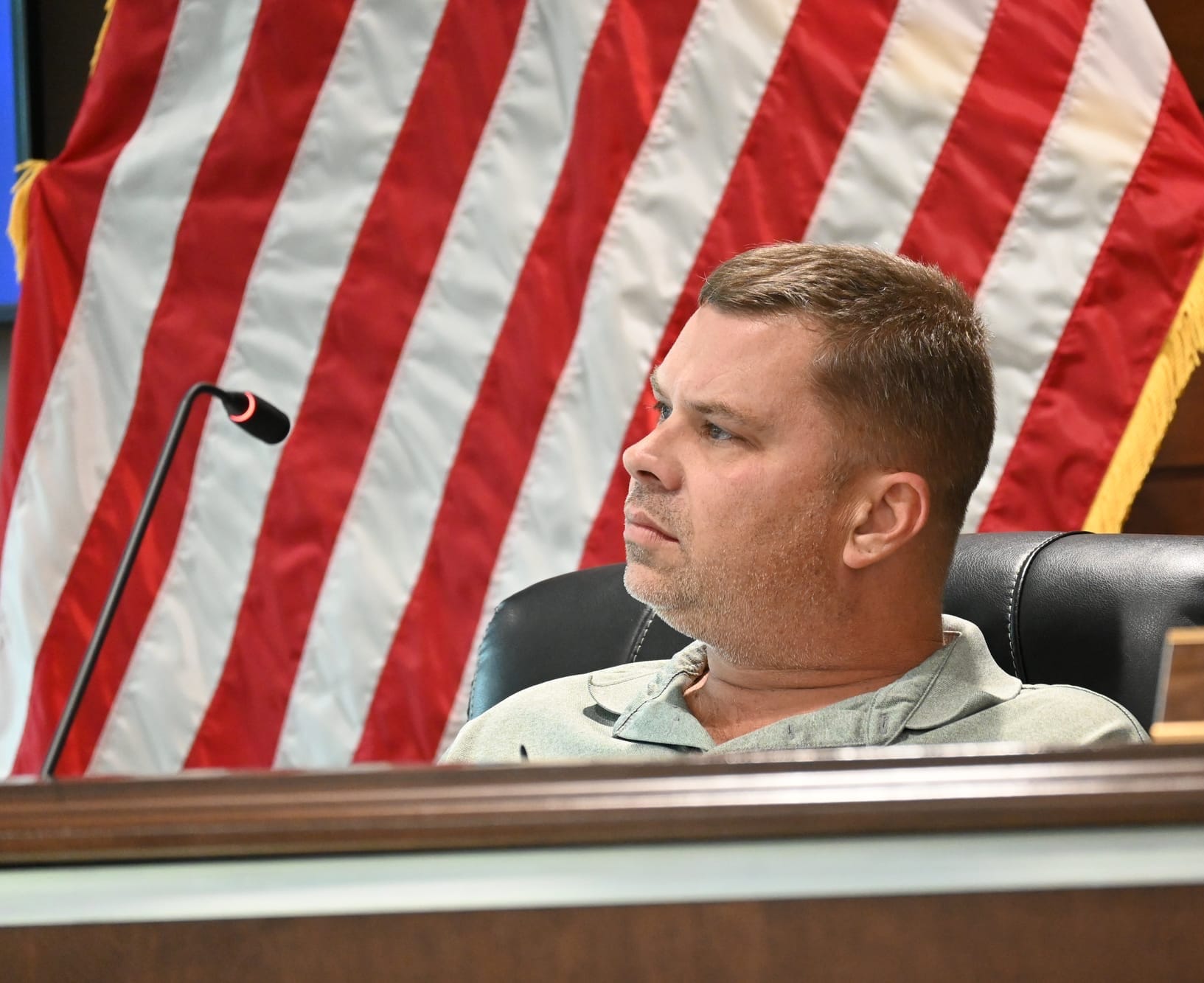
“I think we need to gather some more information and come back to the table with our other board member as well,” Board Member Keith Wever said, referencing the absence of fellow Board Member, Ralph Oliver.
Silicon Ranch owns three solar farms located in Garrard County, Logan County, and Simpson County. The company chose Madison County for its fourth Kentucky-based project because of existing infrastructure that provides access to the electrical grid, Corney said. Additionally, because of the company’s belief in owning the land rather than leasing the property, this was one of the few places they could find enough landowners willing to sell, according to the company's senior project development director, Rob Riley.
“We have to find a willing seller and so that makes it that much harder for us to be able to find a site,” Riley said.
Sixty percent of the land will be occupied by solar panels. Sheep will be pastured at the site to manage vegetation around and underneath the panels, which will keep the soil healthy and help with water retention, Corney said. The other 40% of the site will be used as a federally mandated buffer zone around the solar panels.
The project is expected to power 10,000 homes locally and produce $7 million in taxes over the next 40 years, according to Silicon Ranch officials. It will also create 150 to 200 jobs during the construction phase and two to five full-time positions after construction is completed, Corney said. He also claimed the solar farm will help upgrade and modernize the grid system, improving its resilience to power outages and natural disasters.
No contracts for energy production
The solar farm plans to connect to an existing East Kentucky Power Cooperative (EKPC) transmission substation off of Ogg Lane. From there, it will feed into the PJM grid that moves electricity across 13 states in the Mid-Atlantic and Midwest.
Power generated by the solar farm will be sold to area utilities, according to Corney, who said that the energy will provide electricity for homes and businesses in Richmond. Currently no agreements have been made with any utility companies, Riley said.
“Because of our long-term approach, we want to make sure that we have cleared all of the requirements to be able to successfully deliver a project before we can contractually obligate ourselves to deliver that electricity,” Riley said.
Because there are no input costs associated with solar energy, the company can sell electricity at a lower cost, according to Corney. This, in turn, helps the utilities to manage their rates, he said.
“They're constantly having to upgrade. Electricity demand over the last five years has increased at a rate we've never seen before,” Corney said. “Having more generation like this that's zero input cost helps maintain rates. I can't make any guarantees about lowering those kinds of things but when you buy lower cost power, it helps the utilities manage their rates better.”
Local skepticism
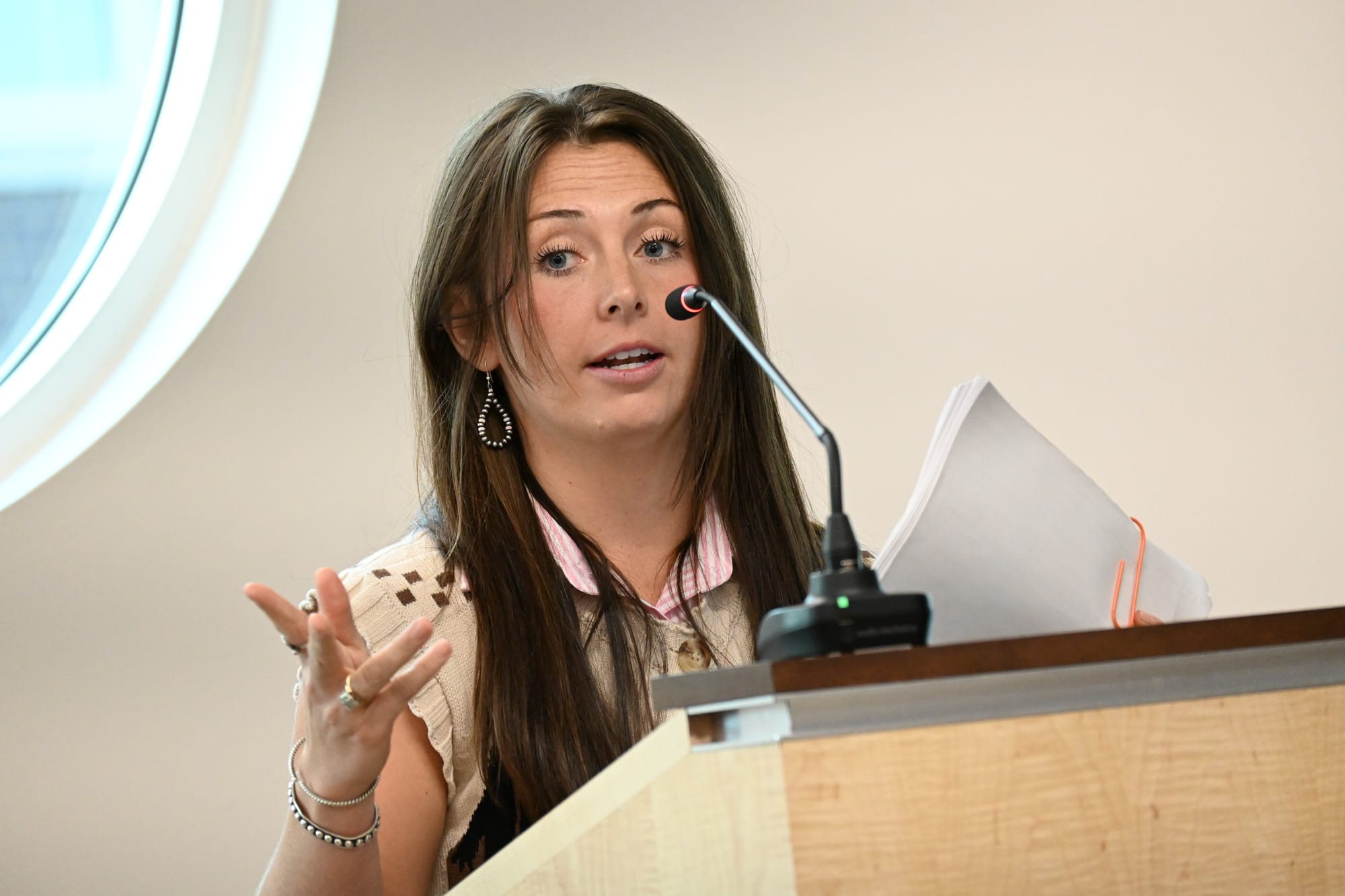
Neighbors of the proposed project site expressed skepticism about the project when it was time for public comment.
“I am concerned because of the lack of transparency of how this was all presented,” Sarah Lynn Poff, who lives near the project, said. “I’m not against solar energy. But this project started long before we ever knew anything about it. Why were they not transparent enough in the beginning?”
County resident Peter Hille advocated for small-scale solar projects on rooftops that he said would have more direct local benefits rather than a large scale solar farm owned by a corporation.
“If we build out all of this capacity in merchant solar, where the benefit of that is going to the shareholders of those corporations, that's not going to be as good for our communities,” Hille said. Hille is past president of the sustainable energy nonprofit, Mountain Association. “If we increase the amount of distributed solar where the benefit is going to the households, the benefit is going to the businesses, the benefit is going to the nonprofits or the local governments. When I save money on my utility bill, that's more money I can spend on local businesses.”
Hille suggested that the company should create a community benefit agreement with the county, if it wins approval from the Board. He cited how, in lieu of taxes, the solar farm company Savion, LLC, pays the Martin County Fiscal Court $1,500 per megawatt produced. This amounts to $300,000 a year, according to reporting by The Mountain Citizen.
Robert Akin, speaking on behalf of the Central Kentucky Laborers Union, said that the project will benefit construction workers.
“We want to build this, but we also want to bring people into long-term jobs in construction. You look at this as a temporary job, but this building was a temporary job. So when you’re a construction worker, you make a lifetime career over temporary jobs,” Akin said. “These jobs are good jobs in the meantime.”
Another resident, Annette Williams, said that the project only benefits the landowners who sold their land and Silicon Ranch. She asked the Board to consider the fact that Lexington rejected a solar farm deal with Silicon Ranch.
“Please make sure that you’re listening to the community members,” Shannon Rose, who lives adjacent to the proposed project site, said. “The people who are standing here are not the ones benefiting from the big payments. They’re the ones who are going to have to deal with this long term.”
Road safety at issue
Residents also expressed concerns about the dangerous conditions on the narrow and hilly Gumbottom and Crooksville roads which border the proposed solar farm which developers said would take between 12 to 18 months to complete.
“The traffic is so bad and there’re no speed limits," Ralph Shearer said. “If two pickup trucks meet, one has to get in the ditch. I’ve had three mirrors broken off of my pickup truck over the years because there just isn’t room to pass. During the construction phase of these panels, there’s going to be big trucks on that road and I’m worried about the safety of the residents.”
Citizens also brought up that the large commercial trucks involved in the construction would deteriorate the roads, increasing road maintenance costs for County residents.
Riley said the company could coordinate with the County to provide traffic plans and delivery routes to address safety concerns. He also said there could be an agreement in place to cover the cost of damaged roads.
Once construction is completed, Corney said he does not believe that the project will impact traffic due to the plant being run by a small group of people.
Decommissioning concerns
Residents also demanded a specific decommissioning plan about how the land will be used after the solar farm has outlived its useful purpose.
Rose proposed that the County mandate the company cover the cost of decommissioning the solar panels. She also said that the land could be put into an agricultural conservation easement agreement to ensure it would be used for agricultural purposes in the future.
The lifetime of the project is expected to be 40 years, according to Corney, who said that to date, Silicon Ranch, which owns more than 180 projects across 15 states, has not been around long enough to fully decommission one of their sites. The company was founded in 2011, he said.
“However, we certainly have been in business long enough to have gotten a lot of input on how better to decommission,” Corney said. “The long-term ownership model we have incentivizes us to maintain our lands in ways that increase their value long-term. So our decommissioning plans, as are required by the conditions that you have approved previously, will ensure that we do the responsible thing to maintain the value of that land and to protect the surrounding properties.”
The company uses a hydraulic press to push the solar panels into the soil instead of the more common drilling method that relies on concrete to stabilize the panels, The Edge previously reported.
“You can take out all the equipment and then farm it the next day because we’ve been farming it for the whole life of the project,” Wade Archer, Silicon Ranch's senior asset development manager, told The Edge during the community meeting on August 4.
More farmland gone
“This farm isn’t just our home, it’s our livelihood,” said resident Haley Gooch, who, with her husband, owns a cattle farm next to the proposed project site.
Between 2017 and 2022, active farmland in Madison County dropped from 82% to 69%, according to data from the state department of agriculture. Gooch questioned the effect the project would have on farm animals and told the Board to consider how the project would impact the future of agriculture. In the past two months alone, more than 1,200 acres of agricultural land have been rezoned for development by the Fiscal Court.
“Eight hundred acres of prime farmland is a great loss," Gooch said. "If this land is being consumed for corporate gain, what’s left to feed the nation?”
Another farmer, Stephen Hochsteller, said that corporations buying farms at prices above market value have made it difficult for farmers to purchase land.
“I have six sons that I’m hoping can farm in the future. And if we lose all of our farmland, how am I going to be able to see them be farmers if there’s no land to farm?” Hochsteller said.
Environmental impacts
Other concerns residents had included soil erosion, contamination, flooding, and the effects the solar farm will have on wildlife.
“They were sued in Georgia because they ruined a neighboring property,” Williams said of Silicon Ranch. “Landowners in Georgia got millions of dollars and won that lawsuit because that company ruined their property.”
Riley said that the project will comply with state requirements regarding stormwater, drainage, and erosion-control. Additionally, because most of the site is vegetated and not paved, the grass will absorb water, he said.
The company also plans to plant native tree species for the vegetative screening, Corney said. The solar panels will not have lighting, though the substation is federally mandated to follow certain lighting requirements.
“We do everything we can to minimize interference with any neighboring properties,” Corney said.
The solar panels are made of a durable glass and there is no liquid in them that could leak into the ground, according to Corney. Cellphones produce more radiation than solar panels, he said.
Board Member Kimberly Olds asked if the solar farm might pose any safety risks for first responders.
Corney said that the company works closely with local jurisdictions to make sure that first responders understand how the system works. The company monitors their power plants from their headquarters in Nashville and can dispatch local maintenance teams to address equipment issues.
“These [monitoring] systems are designed to work with the weather in these particular areas. We have projects in southeastern Georgia that survived Hurricane Helene. They're very advanced tracking systems that monitor the weather in real time and prevent lift and other issues that might come up during a severe storm,” Corney said.
The BOA is expected to vote on the requested conditional use permit for Silicon Ranch during its next regularly scheduled meeting on October 15 at 5:30 pm, according to Planning and Zoning Director Bert Thomas, who attended the meeting Thursday night. Residents are advised to check the BOA's agenda for "old business" for further updates. Public comment for this project is closed, Thomas said.
Sign up for The Edge, our free email newsletter.
Get the latest stories right in your inbox.