Tradition is 'faith in action' at Berea United Methodist Church

This profile of Berea United Methodist Church is the second in our series, the Book of Common Good, where we examine what worship at The Edge of Appalachia looks like across different faith groups. We're examining what makes five Berea churches unique, what they have in common, and what experiences might draw their parishioners together as an ecumenical community.
If you'd like to participate as an ambassador, contact us:
editor @ theedgebereaky dot com
This project has been made possible by a grant from the Foundation for Appalachian Kentucky.
BEREA—The Rev. Dr. Timo Karvonen recalls the time he was helping his mother with chores on his family’s Finnish dairy farm. They were in the barn when she asked him what he wanted to become when he grew up.
“I said I wanted to be a pastor, or maybe a farmer,” Karvonen told me in an interview in his office at Berea United Methodist Church. “I must have been about five or six years old.”
Whether he was prescient about his fate or simply reflecting the limited scope of the range of possible professions that a child in 1960s rural Finland would be aware existed, Karvonen says he isn’t sure. But his path carried him along the road to ministry from then on.
Although Karvonen’s vocation emerged within his family’s Lutheran high church tradition with its emphasis on formal worship, Karvonen, as he is known to his congregation, sought something more personally meaningful, a way to God that went beyond theology.
Open-hearted worship
“I prefer the church to be revived, open-hearted, very personal,” he told me. “The doctrine of the church must be seen in the lives of the worshipers.”
And so, Methodism, with what he says is its rigorous theology paired with personal knowledge of God, drew him in. But the way Karvonen describes it, Methodism is also predicated on the actual practice of faith in community.
“There is a form there that I can tell is theology, but it is more than that,” he told me. “The only way to really understand it is to come and worship with us. Listen to what we preach. Listen to our prayers. Join our singing. See how we love each other.”
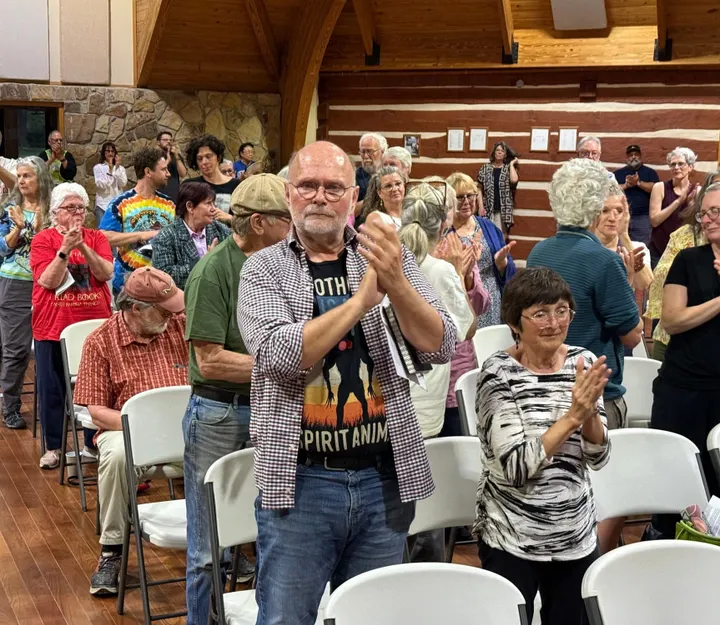
In fact, when I sat with Karvonen for the interview, I had already attended a service early one Sunday in September. There were only a handful of folks there, and when the handbell choir got up to perform, nearly half those in attendance made their way to the chancel.
But from the way Karvonen spoke to the congregation and the way the members spoke back, as though it were coffee hour not an actual church service with the pastor presiding from the pulpit, the impression BUMC gave me was of a tight knit group of worshippers who take an interest in one another, whether or not everyone is present for the conversation.
They used their worship time not only to sing hymns and hear the Gospel and Karvonen’s subsequent sermon, but also to call out from the pews to engage in a conversation, comparing notes on the status of church members who were unable to attend that morning for whatever reason, discussing the details of past and future church events, and sharing a laugh about their Elder’s taste in music, which to my ears had a quick beat.
The ‘Wesleyan Quadrilateral’
Although I took courses in comparative religions and specifically the Reformation in college, until working on this project, the only thing I could confidently say I knew about Methodists was that Charles Wesley, younger brother of Methodism’s founder, John Wesley, was a Methodist who wrote boatloads of hymns.
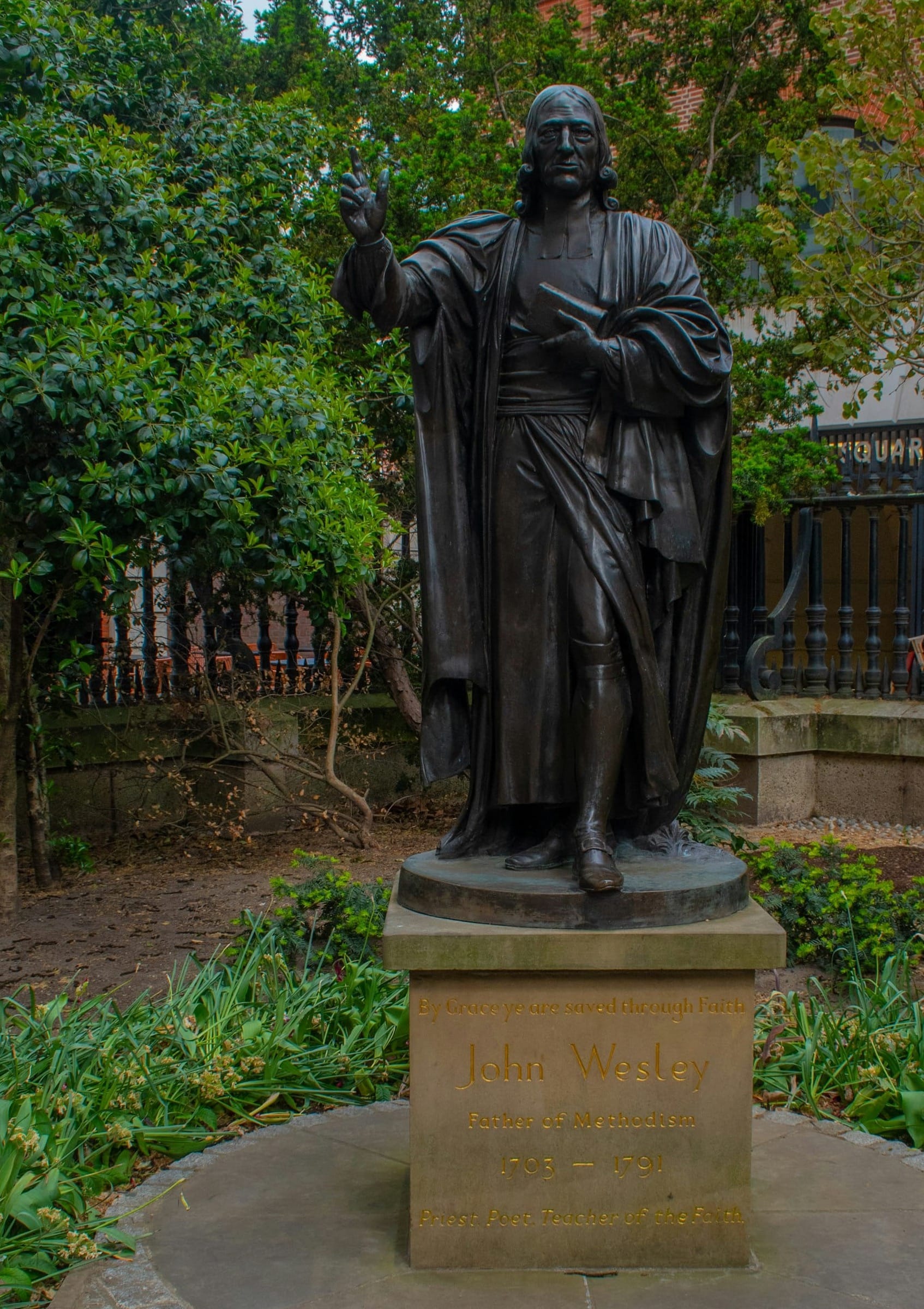
In speaking with Karvonen, I learned that in the late 1720s, when the elder Wesley was enrolled in Christ Church College at Oxford University, studying to become an Anglican priest, he and his brother Charles founded a Bible study group called “The Holy Club”. The club’s members were preoccupied with developing a specific method for unlocking the mysteries of holy scripture, earning themselves the epithet of “Methodists” from their peers.
“It wasn’t really a compliment,” Karvonen told me.
Eventually, the Holy Club’s method became known as the Wesleyan Quadrilateral. The first of the method’s four steps is to spend time reading and contemplating Scripture. Next is to consider the canonical teachings of the Anglican Church, or what Karvonen called the traditions. Then, to know what is true about the Word of God, apply reason. The last step is to consider one’s individual experience of God.
This methodical approach to faith only got Wesley so far, however, a frustration he wrote about in his personal diaries. On a voyage back to England from America, where the two Wesleys had gone to evangelize the indigenous population of the Georgia colony in 1735, the ship they sailed was beset by storms. John Wesley later recalled fearing for his life, while his fellow missionaries aboard the ship, the German-speaking Protestant Moravians, “calmly sung on” with “no complaint in their mouth” even as the sails were destroyed by the storms.
John Wesley wrote in his journal that the Moravians had a deeper faith than his own, something which certainly vexed him. Overall, he considered his Georgian ministry a flop. “I went to America to convert the Indians; but, oh, who shall convert me?” he wrote in 1738, after his return to England. He became fixated with the Moravians.
From Aldersgate onward
It wasn’t until later that same year when he wandered into a Moravian meeting house on Aldersgate Street in London where, upon hearing Martin Luther’s “Introduction to the Book of Romans, he felt his heart “strangely warmed”, which he took to mean he at last understood he was a child of God by grace.
Days before, his brother Charles had had a similar experience. The two of them were now convinced of their faith. Charles went on to write nearly 9,000 hymns—or 10 lines of verse every day for 50 years—and John focused on renewing the spirit of faith in the Anglican Church.
And while Protestants the world over to this day still sing the younger Wesley’s hymns (Wouldn't it be hard to avoid knowing at least one of his 9,000 tunes, even if you only step into church once a year?), an entirely new faith sprung up around the elder Wesley, which apparently displeased him.
“He wasn’t trying to found a new religion,” Karvonen told me. “He was very committed and obedient to Anglican doctrine in the main areas, but he was a revivalist. If doctrine was in the way of what he thought church is really all about, then he would go along with his revived heart.”
So, how did things get away from him?
People were getting fed up with earthly kings, for one thing. Plus, the Western world was on the verge of what historians call the Second Great Awakening, a more emotional and less formal approach to worship as was customary then in the Anglican Church.
This shift in tone was fueled in part by a rejection of the rationalism of the Age of Enlightenment, a fear of the dehumanizing elements of the dawning Industrial Revolution, and unrest caused by the move away from an agrarian economy.
Since the Anglican Church was intimately tied to the British monarchy which resisted the populist sentiment, Wesley’s desire for reformation from within the Church wasn’t well-received.
The Great Commission vs. the Church of England
But the real kicker seems to be the fact that after the Anglican Church refused Wesley’s request to ordain American ministers, he did it anyway. “Wesley’s commitment to the Great Commission held priority over his commitment to the Church of England,” wrote one church historian.
Once the American Revolution untied America from the king, Methodism was irrevocably severed from the Anglican Church. Thus, Methodism American Style, which mirrored Wesley’s own itinerant, preach-to-the-masses approach, was born, spreading across the new country by way of locally held revivals and religious society meetings.
This new denomination spawned several subsects in America over the next two centuries, fracturing occasionally over socio-religious perspectives on topics such as abolition and the Civil War. Then, in 1968, the remnants of several Methodist sects came together and formed the United Methodist Church.
A decade ago, there was another schism centered around the issues of human sexuality. The Book of Discipline, which is the guiding book of the denomination’s theology, polity, organization and practices, had not allowed practicing homosexuals to be ordained or married in the church. They were welcomed to attend church services, but not to be married or be in pastoral leadership.
In 2024 the General Conference of the United Methodist Church removed the language that restricted this, and now condones ordination and same sex marriage. A group of Methodists who wanted to keep the restriction broke off and formed the Global Methodist Church. Berea’s Methodists, as the name of their church suggests, are of the United kind.
Jesuit overtones
Another defining aspect of Methodism at the time of its emergence was its relationship to Catholicism. When I was researching John Wesley for this article, it occurred to me that his intellectual method of interrogating the Bible seemed almost Jesuit in nature, as though he were borrowing the Ignatian concept of developing the intellect in order to rigorously question one’s faith.
Which is why I wasn’t surprised when I came across several scholarly articles and one doctoral thesis noting that Wesley’s contemporaries accused him of being a secret Jesuit, and so held him in contempt because few accusations were worse in post-Reformation Europe than being accused of Pope love.
Wesley himself rejected any comparisons to Catholics, largely because of the emphasis on the Pope’s infallibility—the opposite of his stepwise approach, and a concept which Luther had successfully brought into question more than 200 years prior, leading to the Reformation. Even though Wesley presented this as a theological position, it seems probable it was as much or more so a political statement, since the process of honestly interrogating one’s faith is at the core of both Methodism and Jesuitism.
Further, Wesley did not tend to use exclusionary language in his apologetics. The evidence I gathered for this project suggests that today the United Methodist Church generally, and BUMC in particular, is ecumenical in nature, and curious about other traditions. This past Lenten season, for example, BUMC hosted a series of lunchtime lectures given by clergy from various churches in the area.
Finding a church home
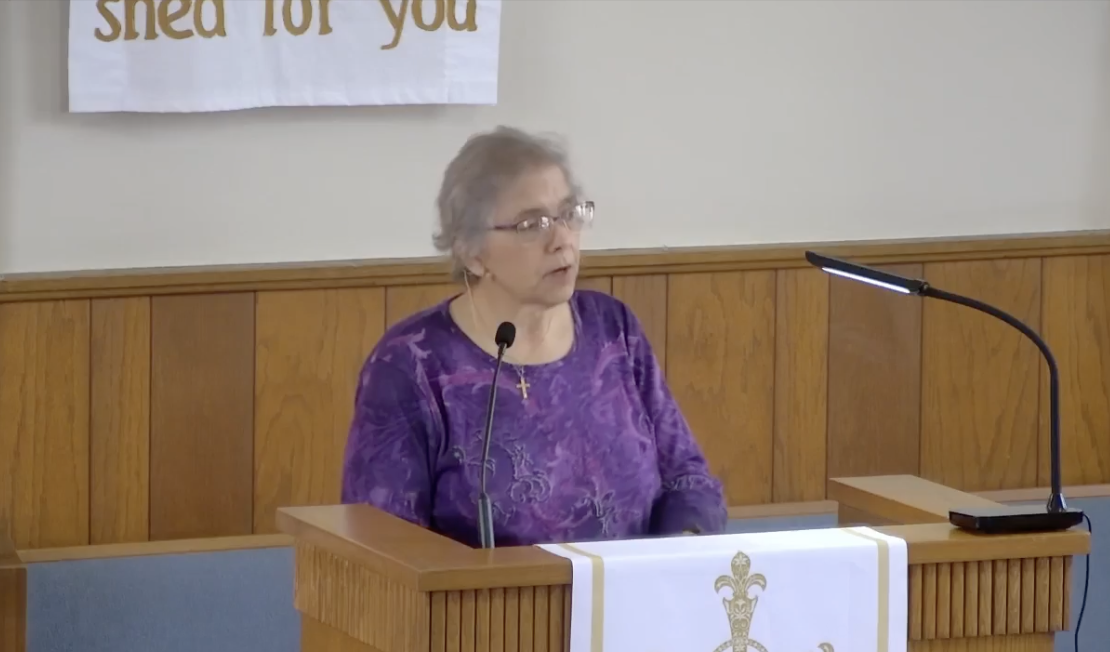
My impression of this was validated by BUMC Associate Pastor, Mary Miller, who oversees the music ministry at the church, was raised Catholic and attended Catholic schools. It was a job opportunity that led her to become a Lutheran before she eventually became a Methodist.
“I didn’t leave the Catholic Church as much as I felt called to join the Lutheran Church, because of where the opportunities were and where I felt God was leading me,” Miller said in an interview.
Although she and her husband Chris were comfortable in their Lutheran faith, when they relocated to Berea from Burnsville, Minn., in the early 1990s, they discovered the closest Lutheran church was in Richmond.
“We wanted a church in our community,” she said. “We didn’t want to go to Richmond.” So, Lutheranism was out. While seeking out which church in Berea would be the right fit for her family, in true Methodist fashion, Miller said she questioned the BUMC minister at the time, Barclay Brown, before committing to attend a service.
“I basically grilled him for an hour,” she told me. “‘What do you believe, you know, theologically? What do you do about Baptism? What about Communion? Da, da, da, da, da.’ And everything he said, I really thought, ‘I like that. Oh, I like it’.”
The Miller family eventually attended a BUMC service one Sunday. It has been their church home ever since, Miller said.
“I can honestly say that from that very first time we visited, we felt like it was home. That was in the Fall of '93,” Miller recalled.
What appeals to her in particular, she said, is Methodism’s explanation of grace. “It’s that God is seeking you out before you are even aware of it,” she said. “That’s called ‘prevenient grace’. It’s uniquely Wesleyan.”
She explained further that grace has stages beyond that. After God seeks one out, then there is the “justifying grace” where one sees and accepts the need for God, and finally there is “sanctifying grace” where one seeks to be more like Jesus. “That is a lifelong process,” she said of sanctification.
Miller became “Pastor Mary” at BUMC in 2019, after 25 years directing music ministries. This eventually led to her becoming more formally trained as a minister in the Methodist tradition.
Five Sisters and a sister
Like Karvonen, Miller grew up on a dairy farm, albeit in rural Wisconsin. Five of her aunts, all of them biological sisters, became religious Sisters in the same Franciscan order. Mary’s own older sister also became a Sister. Miller told me that from a young age, she knew she too would follow a religious path, even if it likely wouldn’t be as a Catholic nun.
When she learned how to play guitar around age nine, it wasn’t long before she began performing in church, eventually leading worship services through music.
Miller attended the Norwegian-American St. Olaf College in Northfield, Minnesota, where she sang in the celebrated St. Olaf Choir, whose disciplined and unfussy a capella recordings of sacred songs and Christmas carols are beloved the world over.
Miller’s experience gives her an authoritative knowledge of sacred music, which is reflected in the range of tasteful musical selections and the overall quality of the music program at BUMC.
“I’m trying to create the space for people to experience God’s grace,” Miller said about her musical selections.
One thing I noted is that there is a mix of hymns, both traditional and contemporary, which I have observed keeps parishioners engaged without making them wonder where the tune is headed and if they can keep up. Although Miller told me that covid decimated the choir there, I found the handbell choir and pianist Christy Moluf are quite good.
Transubstantiation v. ‘occasion for grace’
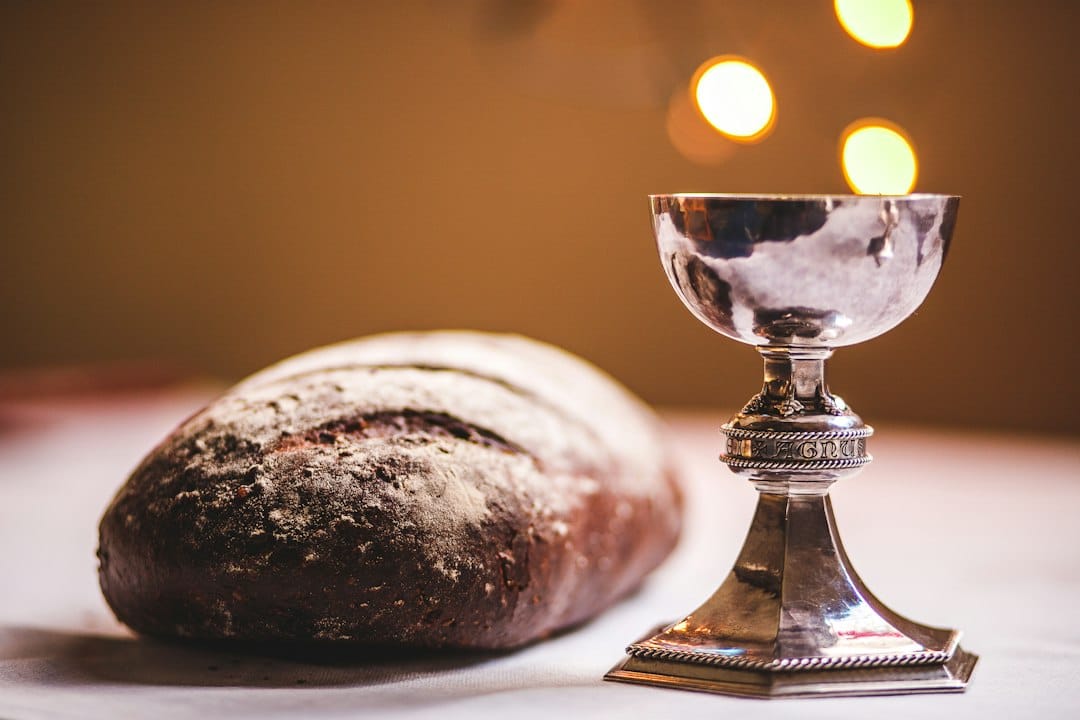
With so much Catholicism in her personal history, I asked Miller if she misses anything about it. Aside from the more contemplative traditions of Catholicism, she said she misses the solemnity and the emphasis on the mystery of the Eucharist in the Catholic Church. But after attending a spiritual retreat focused on the Wesleyan understanding of the Eucharist (also known as Communion), she said, “It was kind of like God was saying, ‘It's okay. I am present there, even though it's not the Communion you're used to.’”
The Eucharist, and in particular, the transubstantiation of the offering, is a focal point of Catholicism, and is practiced at every Mass. In Protestant faiths the Eucharist is more symbolic, and in the Methodist Church, is an occasion for grace, made possible by the Holy Spirit. It is not essential for communion with Jesus, if I properly understand what Karvonen told me.
“It is the ministry of the Holy Spirit to make the presence of Christ and the Communion real,” Karvonen told me. “We are really in the presence of Jesus Christ at the Communion table. And without the Holy Spirit, there is no presence of Christ.”
How often Communion is offered in the Methodist Church depends on the individual congregation, according to Karvonen. At BUMC, it is offered on the first Sunday of the month. When I asked why not every Sunday, Karvonen said that when he took over as the head clergy at BUMC, that was the way it had always been done here locally, so he just left it as is.
From Finland to Kentucky
Karvonen had not intended to be a Methodist pastor in Kentucky. The chain of events that brought him and his family to Berea began when he was a post-graduate student at Asbury Seminary in Lexington in the late 1990s. The global Conference of Methodists was footing the bill for his tuition, but he needed a job to cover the living expenses of his young family of four. So, he took a pastoral position in Taylorsville.
He and his wife fully expected to return to Finland, but by the time Karnoven had completed his post doctoral studies, his children were already acclimated to life as Americans. The family made the tough decision to stay. That he’d already been a minister in Taylorsville made it easier for him to eventually transition into leadership at the Berea church in 2019.
Since Karnoven’s arrival, BUMC has been a hub of ecumenical activity in town. The BUMC participates in the Berea Foodbank, and during the Lenten season, offers lunch and learn programs featuring clergy from other faith traditions. It marked its centennial in 2010.

One Baptism is enough
One thing that Methodists and Catholics agree on, according to Karnoven, is that infant Baptism is as valid as Baptism that is done by choice. This can sometimes become a point of contention, especially with Baptists, whose whole premise for being is predicated on making the choice to be Baptized, according to Karvonen. He said it is also occasionally an issue for Methodist converts who wish to be re-Baptized as part of their born again experience.
“We don’t re-baptize,” Karvonen told me. “This is where it gets tricky because being born again is an important facet of being a Methodist. It's a gift. It is the beginning of your Christian world. But, the water can give to you the grace if you were baptized as an infant, or if you chose it. So we don't have to redo the work that God has really done. If we re-do a Baptism, it’s like asking Jesus to go onto the cross and do it all over again.”
Thinking of that literally gave me the chills, and I said as much to Karvonen.
“Yes, it’s a show stopper,” he said.
Methodists also aren’t picky about how Baptism occurs, according to Karvonen. Immersion, sprinkling, or pouring water are all acceptable in the Methodist tradition, he said.
A life of questioning
To me, it’s intriguing that Karvonen’s and Miller’s respective paths seem to pass through similar landscapes, albeit in different countries. They grew up on dairy farms, were raised in high church settings, attended Scandinavian-Lutheran colleges, and ended up ministers in a Methodist church in Berea.
It seems that both Karvonen and Miller seek to create space for an answer of some kind to emerge. Karvonen looks for God in the space in between people, in how they love one another, while Miller looks for God in the space between the notes of a tune.
The process of searching has been as important to them as the destination, which seems to also have been what Wesley experienced: it’s about always asking questions. Methodism might have originated in revivalism, which is more emotional than traditional, but my understanding of it is that because it is process-oriented, it requires adherents to think about things, and that is how faith becomes dynamic.
From Book of Common Good Ambassador Jen Elam:
As I walked into Berea United Methodist Church on Christ the King Sunday (the Sunday before Advent), I heard the music. I love the music at the Methodist Church. I used to attend this Methodist Church before moving to Union Church. I was happy to be back for a moment today.
Pastor Timo, who is the regular pastor, was not there, but the Rev. Bob Schaeffer, a friend of mine who was filling in, welcomed me quite warmly.
The content of Rev. Bob’s sermon was familiar and sweet. The theme was “new beginnings” and “when Jesus gives thanks”.
Rev. Bob even read a familiar quote that hung in my mother’s kitchen, “All things work together for good to those who love the Lord.”
The first church I ever attended was a Methodist Church. I went with my mother, so it takes me back to a very young churchgoing time. The words to those old tunes miraculously come right back.
My mom eventually went to more Pentecostal churches, but as a teenager, I went to live with my Grandma in Dayton, Ohio, and she went to the Grace United Methodist Church every Sunday. So, hearing the same music now as back then almost makes me cry. So beautiful!
Sign up for The Edge, our free email newsletter.
Get the latest stories right in your inbox.