River of Life, where the spirit speaks in many tongues
The first in our Book of Common Good series
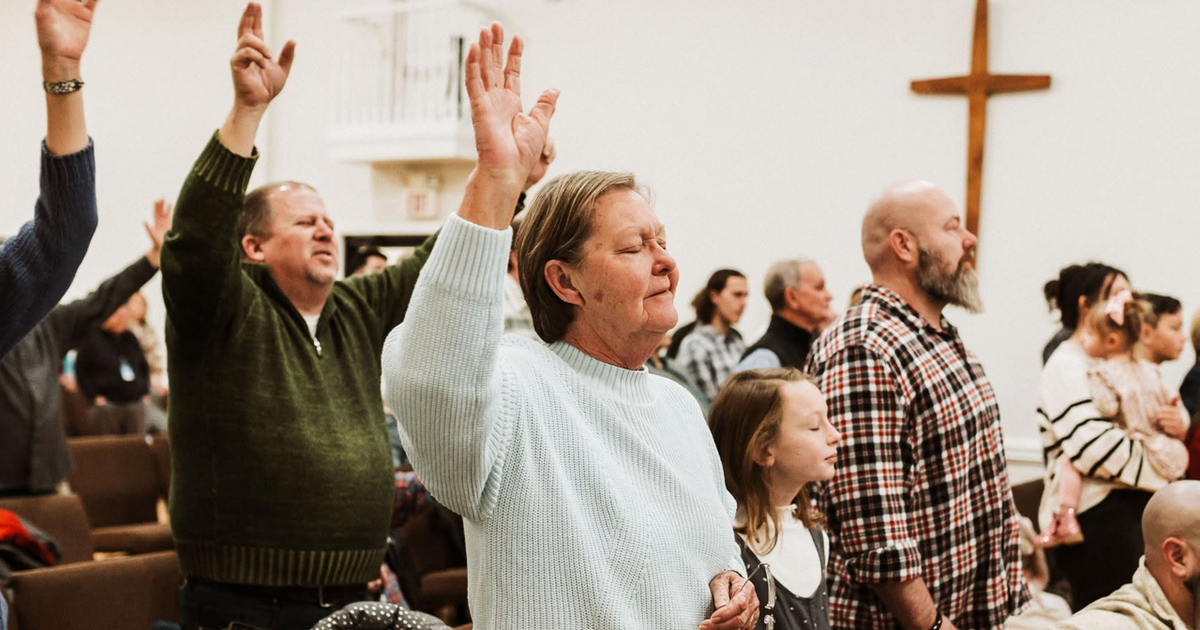
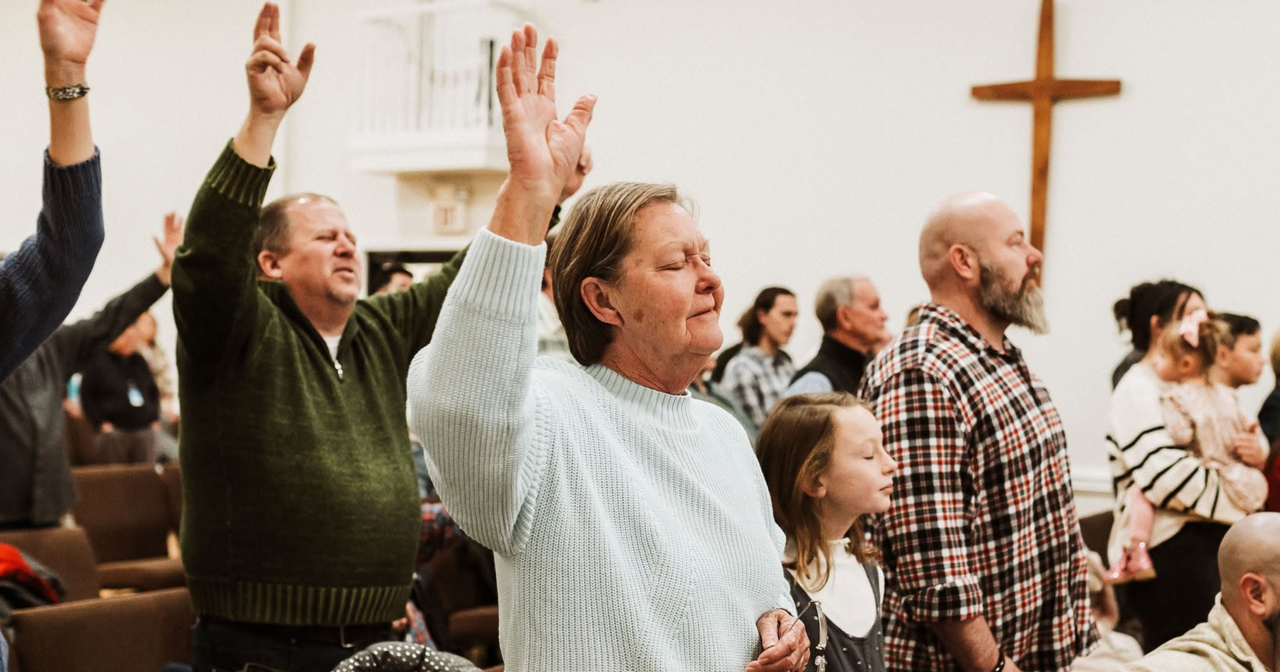
This profile of River of Life Foursquare Church is the first in our series, the Book of Common Good, where we examine what worship at The Edge of Appalachia looks like across different faith groups. We're examining what makes five Berea churches unique, what they have in common, and what experiences might draw their parishioners together as an ecumenical community.
This project has been made possible by a grant from the Foundation for Appalachian Kentucky.
BEREA—Before working on the Book of Common Good, I’d never ventured into a Pentecostal church. All I knew about this faith tradition was that it sometimes featured venomous snakes and speaking in tongues, two things that intimidated me and certainly have never been present in the Catholic churches I’ve attended throughout much of my life.
So, I was more than a tiny bit relieved when I participated in a service at River of Life, Foursquare Church on Mt. Vernon Road in Berea, Foursquare being one of the four “classical” Pentecostal sects, to find nary a snake in sight. Neither was anyone speaking in tongues, at least not that I was aware of, but we’ll come back to that, because Pastor Timothy Lawson told me it does happen there.
Lawson’s frequent reminder to his flock was that who they are now is not who they have to be, that change is available to them. I found this moving because it implies forgiveness and hope while also emphasizing individual agency.
The congregation made a joyful noise in a fashion unfamiliar to me. The service opened with what I had thought would be a hymn, but as one rock-n-roll inflected song, complete with drum set (definitely not Catholic), rolled into the next, we were 45 minutes deep into the service before the singing was over. This musical praise was performed by a truly skilled band of musicians, with Lawson on lead vocals and keyboard. This was followed by the fiery but fun, and sometimes amusing preaching of a seminary student whose exuberance put him in a sopping sweat.
It was my introduction to the more playful style of worship that Lawson later told me in an interview is part of the Pentecostal tradition, beyond the more startling features it is popularly known for, especially outside of Appalachia.
It’s probably not easy to be interrogated about your faith and your personal relationship with the Creator, but Lawson didn’t flinch when, during an interview days later, I asked him the kinds of frank questions I normally do in my role as a reporter. In fact, Lawson seemed to share my curiosity about his own beliefs and why he’s chosen the path he has. His self-reflective nature made for a far-ranging conversation about the history of the church, and why he feels at home within it.
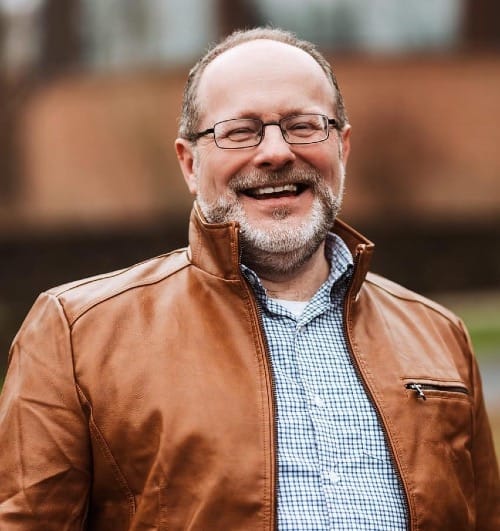
Why Pentecostalism?
Lawson said he grew up in an independent Pentecostal church in the coal mining town of Drift, in Floyd County. It served up a conservative yet loud and rollicking style of praise, according to Lawson, a characteristic he said was in stark contrast to the hardships his neighbors faced in their everyday lives.
“I knew the women who were going home to abusive husbands. I knew the families, who didn’t have any money, and I watched them come to church and worship. They would worship with their whole hearts—dance and cry and raise their hands—and I knew the hell they were going through,’ Lawson recalled. “As a young boy, I would sit there thinking, ‘I don’t know what they’ve got, but that’s what I want, because that’s real.”
After a bout with encephalitis, his father’s personality changed, Lawson said. He started drinking heavily and was verbally abusive. Eventually, Lawson’s mother divorced his father, taking the kids with her, something that created tension in their church. This led to the family breaking away from it when Lawson was 12.
One summer, a neighbor took him to a Free Will Baptist church revival in town. “I went forward and prayed that night. I was 16 and gave my heart to Jesus, repented of my sins and asked Him to be my Lord. I’m 54 now, so I’ve been a Christian for 38 years,” he said.
Lawson went on to earn a degree in music education from Berea College, joined a touring Gospel band, became a music educator, all the while developing his relationship with the Bible, eventually as a worship leader for ten years at Church on the Rock on the Richmond Road outside of Berea (at that time, called Dixie Park Full Gospel Baptist Church) until he and his wife, Anne, ended up at River of Life.
Despite it not feeling like the Pentecostal church he’d grown up in, he knew he’d come home. “It was very different from what I was used to because it wasn’t the screaming-and-shouting, people-rolling-down-the-aisle Pentecostalism I grew up with,” he said. “The women were on stage. They wore pants and shorts. It was totally not religious or legalistic in that regard. And so we stuck around.”
Eventually, his music and worship leadership experiences culminated in his being asked to lead the church. He has been head pastor of River of Life since 2007. Unlike in Catholicism and Protestantism, seminary is not requisite for Pentecostal pastors across the sects, although Lawson said that in most cases, pentecostal churches won’t hire clergy without a relevant college degree.
There also is a licensing process that evaluates candidates on doctrine, personal history, and polity and governance. Similar to how a PhD candidate must orally defend a thesis, Lawson said there is an interview before a panel, which if passed, leads to being a licensed Pentecostal pastor.
“Then you serve for a period of time and eventually become ordained,” Lawson, who himself is ordained, said.
As a side note, Dottie, the effervescent church receptionist at River of Life, is Pastor Tim’s mother. After she left the church of Lawson’s youth, Dottie spent years as a night club singer who toured often, eventually returning to the church under her son’s pastoral care.
Roots of Pentecostalism
Still, Lawson said Foursquare is considered a classical Pentecostal denomination, along with the Assembly of God, Church of God, and the United Pentecostal Holiness Church. There are only four other Foursquare churches in Kentucky, according to Lawson.
An historical timeline places Pentecostalism as having begun in Vineland, New Jersey in 1867. The religion as a whole mostly appeals to marginalized communities, especially impoverished ones, according to the Christian History Institute, which also claims that with nearly half a billion adherents globally, and a growth rate of about 35,000 per day, its world population is second only to Catholicism.
The Hartford Institute for Religion Research, however, says that because there are so many independent Pentecostal churches, it’s hard to pinpoint precisely how many Pentecostals there are. Still, the two Institutes agree that Pentecostalism is among the most important developments in recent Christian history.
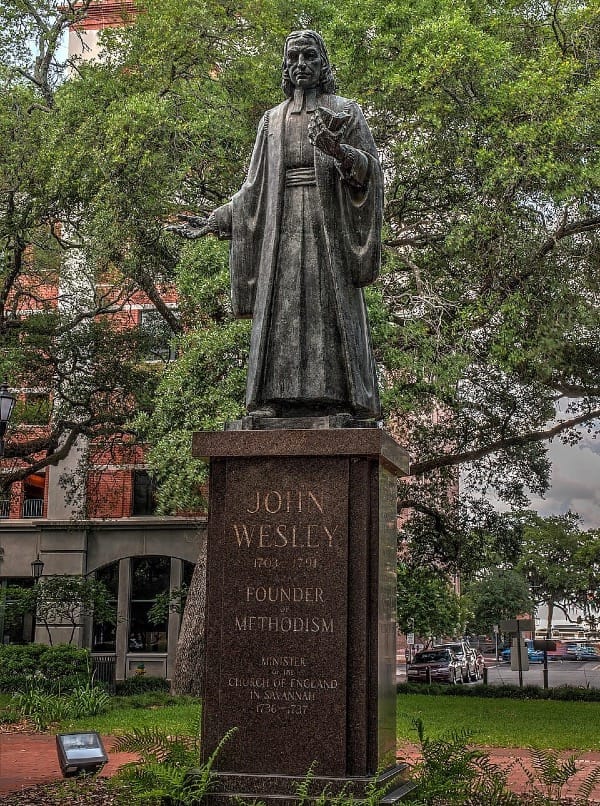
The religion draws its name from the fiftieth day after Jesus’s ascension (Pentecost is the number 50 in Greek), the day when the Holy Spirit filled the disciples and they began to speak in tongues (Acts 2:4). Rooted in the Holiness movement in Methodism, based on John Wesley’s writings about Christian perfection, which posits can only happen after a person has been re-baptized by the Holy Spirit, according to the Hartford Institute.
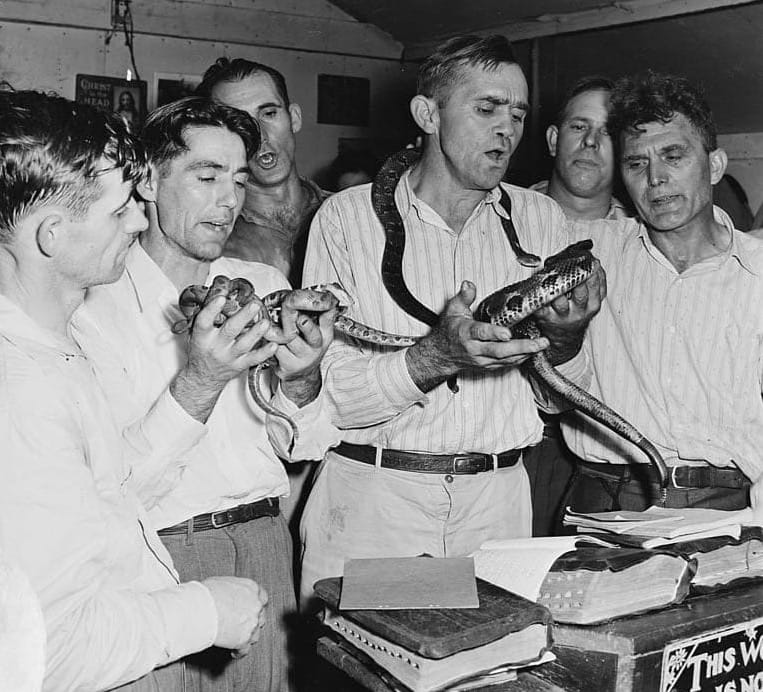
Speaking in tongues, snake handling
An outward sign of this is thought by Pentecostals to be speaking in tongues (glossolalia), something Lawson said is “a really cool thing.”
But, I asked, what is the point of a person uttering unintelligible syllables if no one can understand what is being said—why build a faith around it?
“You don’t know what to pray,” Lawson said, speaking about people generally, not me specifically. “You don’t know how to pray. But the Spirit knows how to pray and speaks in a language you don’t understand. Paul says our understanding is not fruitful when we do that, but our spirit is edified.” (That’s St. Paul for Catholics and Protestants who might have wondered who the random guy named Paul with an opinion might be.)
A sociologist’s investigation of glossalia in the Pentecostal sect, Assemblies of God, found that just over two-thirds of adherents had experienced it personally.
A person’s speaking in tongues doesn’t always need to be interpreted, according to Lawson. “So if a person is speaking in tongues and nobody needs to interpret it, it’s not about anyone else other than the person experiencing the speaking tongues.”
But, he said, there is also the gift of tongues that is intended for the edification of the body. “That’s Corinthians 12:10. There’s a gift of tongues that has to be interpreted.”
In his own experience as an interpreter, Lawson said, “As I talk, it’s from the Holy Spirit. It’s not from my mind. It’s not something I’m thinking about. It’s like, that has to be God because I would not have thought of that.”
When these moments occur, it is also edifying for the church, according to Lawson. “There is something about having a supernatural experience when the congregation gets together,” he said.
As for the snakes, we didn’t really talk much about that, but snake handling started at the turn of the last century, reportedly in East Tennessee, and is based on Mark 16:15–18, which at its most distilled, says perfect faith will protect one from the serpent’s venomous bite.
That’s according to an academic paper that also claims the snake handling sect, based in Holiness Pentecostalism, is a fringe sect, “understudied” by religious scholars, even if the popular media has had an outsized fascination with its members.
The result being that we don’t know much about snake handling as a religious tradition objectively speaking, other than many handlers in fact have died from snake bites, and that the practice was criminalized across several states in the middle of the last century, something which the paper’s author points out is considered by some as a way of “othering” what is misunderstood outside of Appalachia. There have also been multiple First Amendment challenges in favor of the practice, citing religious freedom, but to no avail.
“Church and state, media and academe inscribe competing narratives on the handlers. They are simultaneously saints and suicides, cultists and criminals, preachers and performance artists,” the author wrote in the paper’s postscript.
Kentucky statute forbids handling snakes for the purposes of conducting a religious service. And yet, I’m told that until quite recently, there used to be an independent snake handling Pentecostal church off of Route 25 just south of Berea, just over the Rockcastle County line.
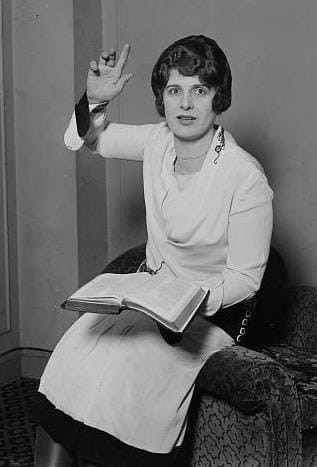
Flamboyant Foursquare founder
Lawson told me about how River of Life is part of the International Church of the Foursquare Gospel, a Pentecostal denomination founded in 1923 by Aimee Semple McPherson. In several accounts I read about her life, McPherson seemed to speak often about how God expected “more” of her after she’d settled her initial doubts about God. From doubter to evangelizer, Semple would go on to lead an international movement.
“It's been around just about 100 years. So it's pretty young compared with other movements. But there are many more Foursquare churches around the world than there are in the United States. It spread locally and really exploded, especially in Latin America,” Lawson said. “In fact, there is a Nepalese Foursquare church in Louisville. It's actually a thriving church. So Foursquare is very international, very cosmopolitan.”
Born a Canadian in 1890, “Sister Aimee” as she came to be called, had been brought up in the Methodist tradition with a mother who was very active in the Toronto-area Salvation Army. Semple found her way to Pentecostalism by accident.
“The story is that she was walking down the street with her father and there was a Pentecostal evangelist named Robert Semple who was having a service,” Lawson recounted to me. “They went in, and that’s when she experienced what Pentecostals called the baptism of the Holy Spirit, where she began to speak in different languages.”
The two moved from Ontario, Canada, to Chicago where preacher William Durham, a Broadhead, Ky.-native, was beginning to codify his Full Gospel Pentecostal teachings, which are at the heart of Sister Aimee’s own Foursquare Gospel.
While the Semples were in China as missionaries, Robert Semple became ill and died. Sister Aimee returned to the US and remarried, this time to Harold McPherson. Despite her nuptials, it wasn’t long before she was off on her own to Los Angeles, Calif., where she earned a reputation for being good to the poor.
“She had quite a great ministry. During the Great Depression, I think she helped feed more people than any other organization in the city of Los Angeles,” Lawson said.
Los Angeles is where Pentecostalism came into full flourish during the 1906 Asuza Street Revival, led by an African American pastor, William Seymour. He is also the one who declared speaking in tongues as Biblical evidence of the Holy Spirit.
This gift of the Holy Spirit, as it is known, and the Fourfold ministry of Christ are at the core of The Foursquare Church: Christ as savior, healer, baptizer with the Holy Spirit, and coming king, according to the church's mission statement.
Meanwhile, Semple’s star as an evangelical healer of the sick and infirm began to rise once she arrived in the City of Angels. Her various ministries came together in her megachurch, the Angelus Temple, one of the very first such churches ever founded by a woman. The popularity of her healings were aided in part by the radio broadcasts of her sermons, made possible by her possession of a broadcast license, also unusual for a woman of her times.
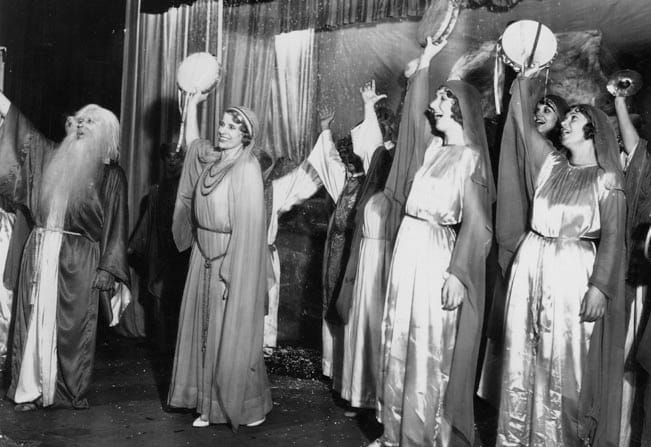
When Sister Aimee’s marriage to Harold—who apparently became fed up with her popularity—ended, her status as divorceé only added to her mystique. She remarried and divorced a third time, still.
More notable, however, was Sister Aimee’s penchant for glamour, something Lawson explained that more conservative Pentecostals, like those of his youth, are averse to adopting.
Whereas many Pentecostal women, such as those in the Holiness sect, do not cut their hair, nor wear make-up or trousers, Sister Aimee developed what Lawson described as an expression of the faith greatly influenced by Hollywood’s emphasis on showmanship and larger-than-life gestures.
“It's definitely West Coast Pentecostalism, a little more laid back,” he said. Several photos of Semple online show her dressed in elaborate costumes, part of the Biblical storytelling pageantry for which she was known. After seeing a range of images of Semple in fancy dress, I’d say a lot more “laid back”.
Keeping church and state separate
Pentecostals are often lumped in with all Evangelicals, in part because a central tenet they share is adherence to the Great Commission (Matthew 28:18-20), where Jesus instructs his disciples to go out into the world, preach his Gospel, and make believers of all peoples and baptize them, something central to Pentecostal faith traditions.
But for Lawson, the overlay of politics on evangelism over the past 30 years has muddied the waters.
“We're in a society where you have to pick a team, pretty much,” Lawson mused. “Christianity is too big to fit in those boxes. The real issue for me as a Pentecostal pastor is trying to help our congregation think like Christians led by the Spirit that have a Christian worldview rather than one of Democrats, Independents or Republican voters who are tempted to be led by the American Dream or some version of justice that falls short of what the Gospel of Jesus Christ offers."
He said that it’s nearly impossible to pigeonhole both his own faith, and that of his church overall, since in both, there is a heavy focus on social justice, as well as conservatism.
“Foursquare is also very much about traditional marriage between a man and woman, traditional human sexuality, and those kinds of things. However, we also ordain women and believe women can serve in any level of authority,” he said. “I don't think either political party captures everything about the Gospel or about Christ. What I found is that some of the issues that I would call moral issues were not originally political, but they've become political.”
Ultimately, Lawson asserts that a saying in the Foursquare Pentecostal tradition sums it up nicely when referring to how to bridge differences of doctrine across not just the four Pentecostal sects, but all faiths. “In essential things, we have unity. In nonessential things, we have liberty. But in all things, we have charity, or love,” he said.
The Old Testament, Israel, and the Rapture
Most times when I try to ponder the lessons of the Old Testament, I grow impatient with what I perceive to be a bunch of whiny and easily distracted people being chased through the desert by a sociopathic God who’s constantly inventing new ways to torture them as they wander around going nowhere.
It bothers me that I might be missing the point when so many others—including an entire faith tradition, Judaism—seem to get so much out of the text. What’s the lesson here?
So I asked Lawson about it.
“I would say the Old Testament is the picture of God’s plan to restore humanity and to restore us to Himself,” Lawson told me. “That relationship was severed because of Adam and Eve’s decision.”
We all know what happened next, even if we might not have thought about the consequences of that fall from grace in the same way Lawson has.
“I’ve always thought that Eden was like a learning lab to take God’s great goodness and spread it across the earth,” he said. In Lawson’s version, Adam and Eve were supposed to partner with God. “I think the plan was for God to plant a garden in Eden and put them in the garden and tell them to tend it, take dominion over the earth.”
And the point to it all was for them and for us, as their descendents, “to unlock the mysteries of creation for the betterment of civilization without taking advantage of creation,” Lawson said. “To learn how to better civilization with what we’ve discovered, and without exploitation.”
So, then was God enraged because the tribes of Israel lacked curiosity about the natural world? I wondered.
“The thing that kept tripping them up was idolatry,” Lawson said. “They just could not stop worshiping idols. Every time you turned around, they were doing it.”
Eventually, it became clear that they weren’t going to stop, according to Lawson. “What they should have done was say, ‘Oh God, We know that we’re fallen people and broken people, and we want to stop [worshiping idols], but we can’t.’”
So, the rest of the Old Testament, according to Lawson, is God working it out that he was going to have to send a solution. “Jesus had to come because we couldn’t do it,” Lawson said. “It” being to return to the garden.
Which of course led me to ask about Israel.
After we vetted the various Pentecostal sects’ respective takes on God’s chosen people, I asked Lawson what his personal view is.
“[God] says He’s going to call all the Jews from all the corners of the earth and bring them together again. Well, that hasn’t happened. They say it happened when Israel became a nation, but I’m not even sure that’s true. There are still Jews all over the world,” Lawson said, differentiating between what he calls the “political” Israel and a version of Israel yet to come.
“Because political Israel today is not serving God,” Lawson claimed. “To my knowledge, I don’t know if they’re even overly religious. Some are observant in Judaism, but the majority are secular Jews who don’t even follow the law.”
That being said, Lawson is committed to understanding and supporting the people of the Holy Land. "I love Israel. I have a shofar, a tallit, we’ve done Passover seders in our church, I’ve been to Israel as a college student and done missions work," he said.
Lawson said that God’s promises to the Jewish people, including gathering them up in one place, have yet to be fulfilled. “But Paul makes it pretty clear in Ephesians that Jesus, on the cross, tore down the wall that separated Jew and Gentile and made one new man, one new creation. I say one new race,” he said. “Basically, the rule now is that if you are part of the people of God, you put your faith in Jesus. That’s it.”
Will the Rapture sort it all out?
“To be honest, I’m what they call a pan-theologist. I believe it’ll all pan out in the end,” Lawson said. “I used to believe that we were going to go through the Great Tribulation. Then I believed we were going to get taken out before the Great Tribulation. Now I’m somewhere in the middle. I think we don’t really know what we think we know.”
After working our way through some of the more bizarre imagery of the Book of Revelations, Lawson returned to his “it’ll all pan out” perspective. “I’m not saying there isn’t a Rapture. I’m just saying there’s a whole lot of people who worry about that, and I’m like, well we really should just be trying to do the work. It’s more about what’s in your heart,” he said.
It occurred to me the possibility that we might be dealing with an alien invasion before the question of Israel is sorted out, something the Vatican has already begun addressing. So, I asked Lawson about the Pentecostal take on this.
“The Bible talks about how, in the last days, there will be signs in the heavens. So there’s a lot of these sightings. It doesn’t surprise me” Lawson said. “Jesus told the disciples, and the crowds, not to freak out when they saw those things. [He said] that you can look at the seasons and tell what season it is. You can look at the stars and moon and trees and tell what season it is, but you don’t know what season it is spiritually.”
Maybe the aliens are the sign the rapture is here, Lawson mused. “I’ve often wondered: If there was a rapture, how would the world explain that? How would people who were not taken understand what had happened? But now that people are talking about aliens, I can see it being said that we were abducted by aliens, that the church was gone because aliens came and took them away.”
Would aliens need redemption?
“I don’t know,” he said, adding that he doesn’t think much about aliens, but that if there are any, they too would need redemption. In any case, he thinks space exploration deserves our attention because it will help us understand our lives here on earth. “I think that’s one of the ways we’re trying to understand what God has given humanity to manage and steward. I think that’s part of the wonder and awe that we have of discovering what God has given us,” he said.
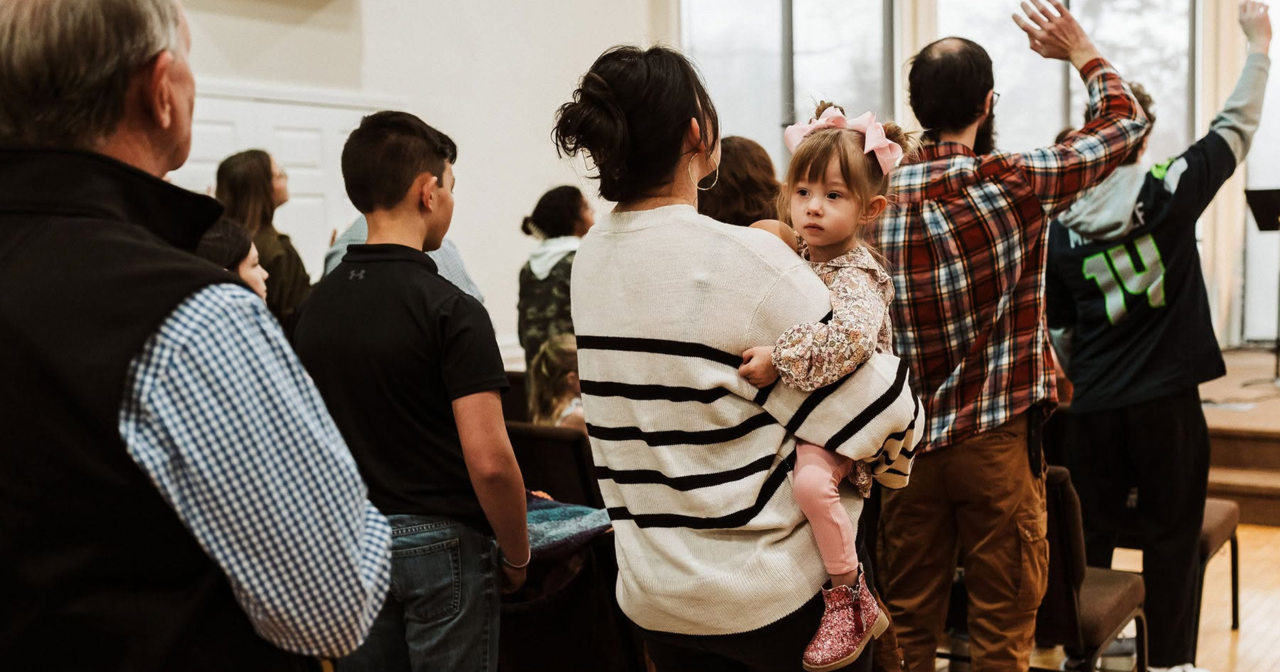
A recent Sunday service at River of Life Foursquare Church in Berea
Which church is the right church?
As to the question of which church is the “right” church, Lawson said that since salvation comes through Christ, membership in a particular church isn’t the point.
Plus, he said not all churches suit all personalities, so if having a variety of paths brings more people to Christ, then he is all for it. “We’re very loud and dance. We’re not for everyone,” he said, speaking about River of Life.
This take put me in mind of the snarky Catholic’s favorite theologian, Flannery O’Connor, who once quipped that, “most of us come to the church by a means the church does not allow.”
“I think even from the beginning, with Athanasius and those first few centuries, we’ve had to work through these things,” he said. That’s Saint Athanasius, the one who had the idea to write the Nicene Creed.
“We just did a series on the Trinity, and we talked about how many hundreds of years it took for them even to make a statement that they could all agree on,” Lawson said. “They didn’t all agree about whether or not Jesus was God. Then it took another 70 years to say, And who is the Holy Spirit? It took hundreds of years to figure that out because those are really complicated ideas.”
And complicated ideas can lead those who philosophize about them to feel passionately about their stance, Lawson said, especially if the idea can’t be reconciled with their own conscience. “If they can’t give over to something they don’t believe is true, they start their own thing,” he said.
But that doesn’t mean that there aren’t casualties from the schisms. Lawson expressed his fondness and respect for the Catholic church’s traditions such as the liturgical hours, Lectio Divina, and the monastic emphasis on silence, forms of prayer which he said he is trying to incorporate more of into his own congregation’s worship habits.
“We don’t really do silence very well as Pentecostals,” Lawson mused. “Every time there’s silence, somebody has to give a word or a prophecy or a tongue. Can we just be quiet for a minute? That’s really hard to do.”
Without the silence, Lawson worries he and his congregants might be missing some important messages from God. “‘Lord, is there something You want to say that I’m not hearing?’” Lawson said he asks. “I think God is always saying stuff.”
Impression on a seeker
Since the Book of Common Good project is intended as an ecumenical project for the laity, delegations from the five participating churches are asked to visit the other churches in the project. Each church "ambassador" files a report describing their experience, emphasizing what is similar and different to their own congregation.
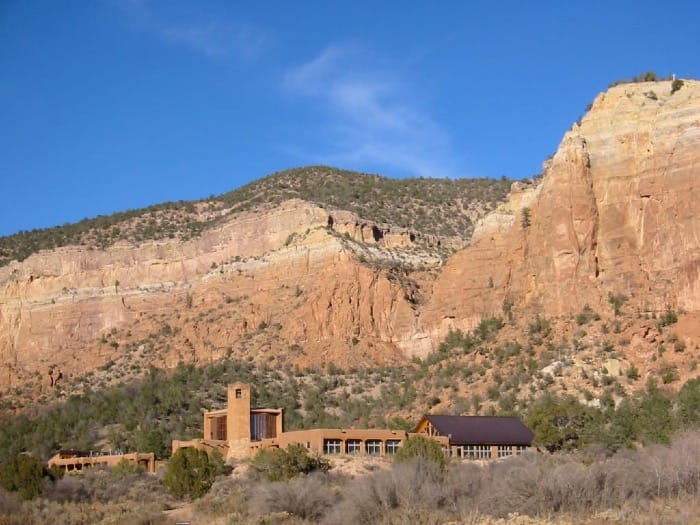
Even though there are plenty of Catholic priests who would fall on the floor if they had witnessed what this person describes, since there are dogmatic obligations surrounding the Eucharist, it tracks with my own experience of the Benedictines who run the monastery in the vignette. It made me smile to think of the monks' hospitality to all, echoed by that of the folks at River of Life.
The following was submitted by Vickie Dinsmore, a congregant at Berea United Methodist Church. The passage was edited for length and clarity.
"The pastor at River of Life said that theirs was an open communion, that if you were a believer you were welcome, and if you were not a believer, then you’d come to the right place.
"It reminded my husband of an experience he had a young man hitchhiking out West. He was at the Monastery of Christ in the Desert in New Mexico. He went to Mass, but when communion was served, he declined, saying, 'I don’t even know if I am a Christian.' The priest said, 'Take this! Christ died for everybody.'
"My husband and I left the service at River of Life feeling that it embodied this conclusive love, where ALL are welcome."
Sign up for The Edge, our free email newsletter.
Get the latest stories right in your inbox.