
All opinions expressed in The Edge's Opinion section are strictly those of the contributing author and do not necessarily reflect the views of The Edge staff. To submit an opinion, contact the editor:
by Douglas Vandergraph
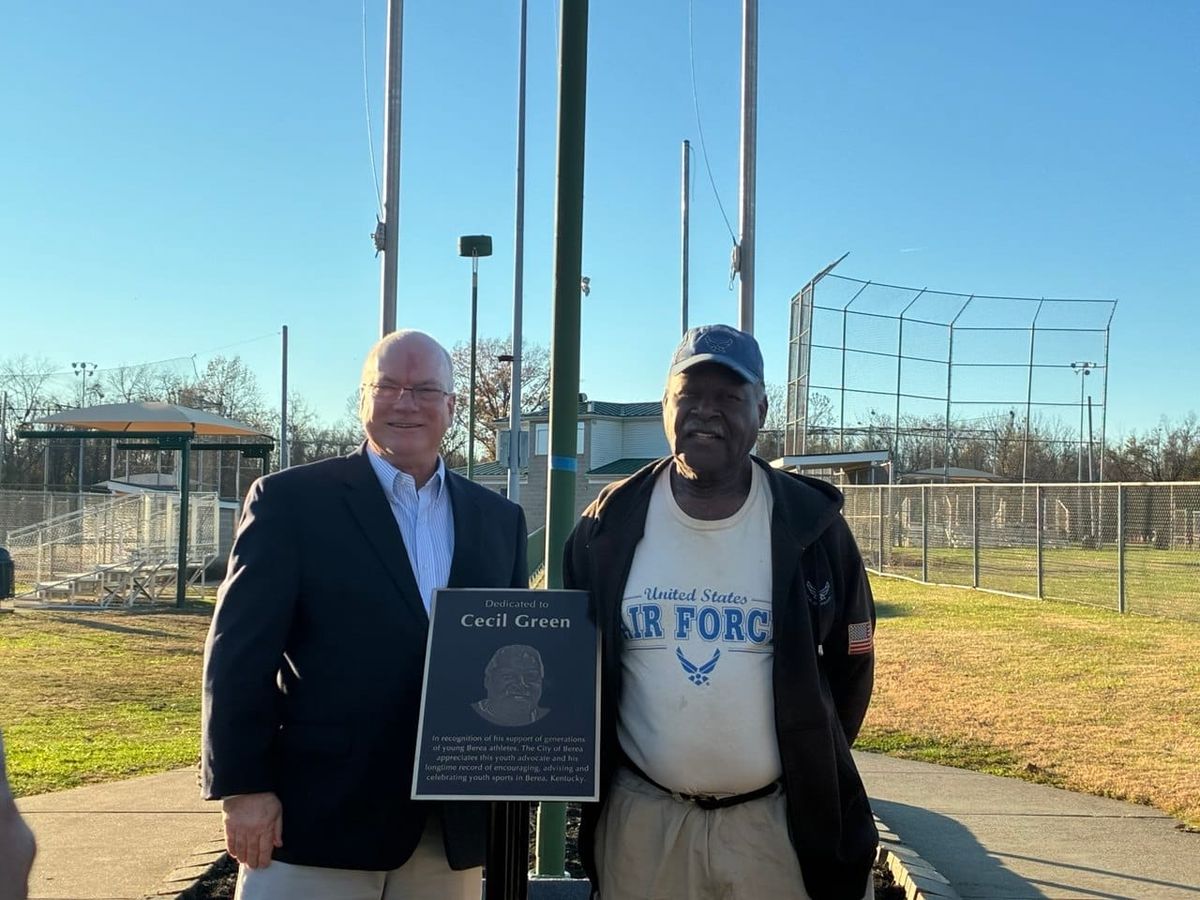
At Berea's Community Park, a plaque between the ballfields honors Cecil Green. His story is about more than 20 years coaching young athletes. One detail about Green matters most: after he retired from coaching, he kept showing up at games.
A town can hang a plaque to mark the years someone served. It cannot easily put into metal the ordinary decision to return when no one is paying you or expecting you to take charge.
Green coached baseball and softball at Foley Middle School, Madison Southern, and in Berea youth leagues. His stated coaching philosophy was straightforward: help young players improve, keep going after failure, and take their studies seriously. None of those goals requires a winning season to matter. They require a patient adult who knows that a child's first effort is rarely the child's best effort.
We tend to tell stories about coaches using trophies and records because they can be counted. Wins fit on scoreboards. Awards fit in cases. But if a child who struck out in April returns to play in May because someone remembered his name, something important happened that the scoreboard may never show.
If a shy athlete starts believing that a difficult class can be passed with steady work, that is a victory as well. The question for Berea is not only how to honor one dependable mentor. It is how to make such attention common.
One of the scenes from the Gospel that comes to mind is in Mark 10. People bring children to Jesus, and the disciples try to send them away. Jesus does not treat the interruption as a problem to be managed. He stops and makes room for the children.
The lesson is not that children belong at the center of every ceremony. It is that adults who believe they are doing important work must not become too important to notice the child waiting at the edge of it.
That is a demanding standard for our recreation programs, schools, churches, and neighborhoods. A team may have beautiful uniforms and new equipment and still leave a child feeling unwelcome. An adult may give a polished speech about the future and still have no time for a teenager who needs the same explanation twice. A community can celebrate participation while making it difficult for children without transportation, fees, or a parent free to leave work.
These are questions, not accusations against Berea's volunteers. Our welcome matters most where someone is overlooked.
The Edge also reported that Green attends roughly four or five games each week and that his encouragement extends to Berea College basketball. That tells us something about the shape of service after a formal role ends. He is not coaching every team from the sideline. He is present.
Presence is sometimes dismissed because it cannot be entered neatly into a budget. Yet the person who sits through a losing game, asks a player how school is going, and comes back the following week may help build the confidence that makes a young person stay involved. The value of consistent encouragement is something every community can recognize.
There is a practical way to honor that lesson. Ask young athletes and their families what keeps them from returning. Ask the children who are not on a team whether they want a place to play, learn, help, or simply belong. Make room for adults who cannot commit to coaching an entire season but could be a dependable presence at an event, a ride coordinator, a tutor, or a patient helper at a beginner's practice.
None of that replaces background checks, clear boundaries, or good supervision. It gives responsible service more than one doorway.
It also asks us to notice the volunteers whose names are rarely announced. Some prepare fields, find lost equipment, organize schedules, and stay late when parents are delayed. Some keep score or help a younger sibling feel safe while a game is underway.
Few can give twenty years or attend four games a week. But many people can give one hour in a way that tells a child the hour matters. A good community should make those smaller commitments possible instead of treating anything less than total availability as no help at all.
I appreciate that Berea recognized Green while he can receive the thanks himself. Gratitude should not have to wait for a memorial service. But the ceremony can also become an invitation. The city has talked about improving youth recreation, including plans for a new indoor recreation center.
As those discussions continue, the question should be not merely what a building will contain, but whose first day in that building will be made easier. How will a newcomer find someone to ask? Who will help a child try again after embarrassment? Who will notice when a family stops coming? Those answers belong in planning alongside construction.
The plaque between Berea's ballfields can do two jobs. It can thank Cecil Green for faithful attention, and it can ask the rest of us what kind of attention we are willing to give. Jesus welcomed the children whom busy adults were prepared to overlook.
A town honors that teaching not by pretending every child will become a star, but by refusing to make a child's worth depend on it. When a season ends and a coach no longer has to be there, the most moving thing may be to see that he came back anyway. That is a lesson worth carrying beyond the park.
Douglas Vandergraph is a resident of Richmond, Ky. and Ft. Collins, Colo. His collected writings on practical Biblical teachings for are available on his website.
Sign up for The Edge, our free email newsletter.
Get the latest stories right in your inbox.


