Carr farm rezoned for industry amidst public outcry
'History will tell if we were right,' Magistrate Tom Botkin
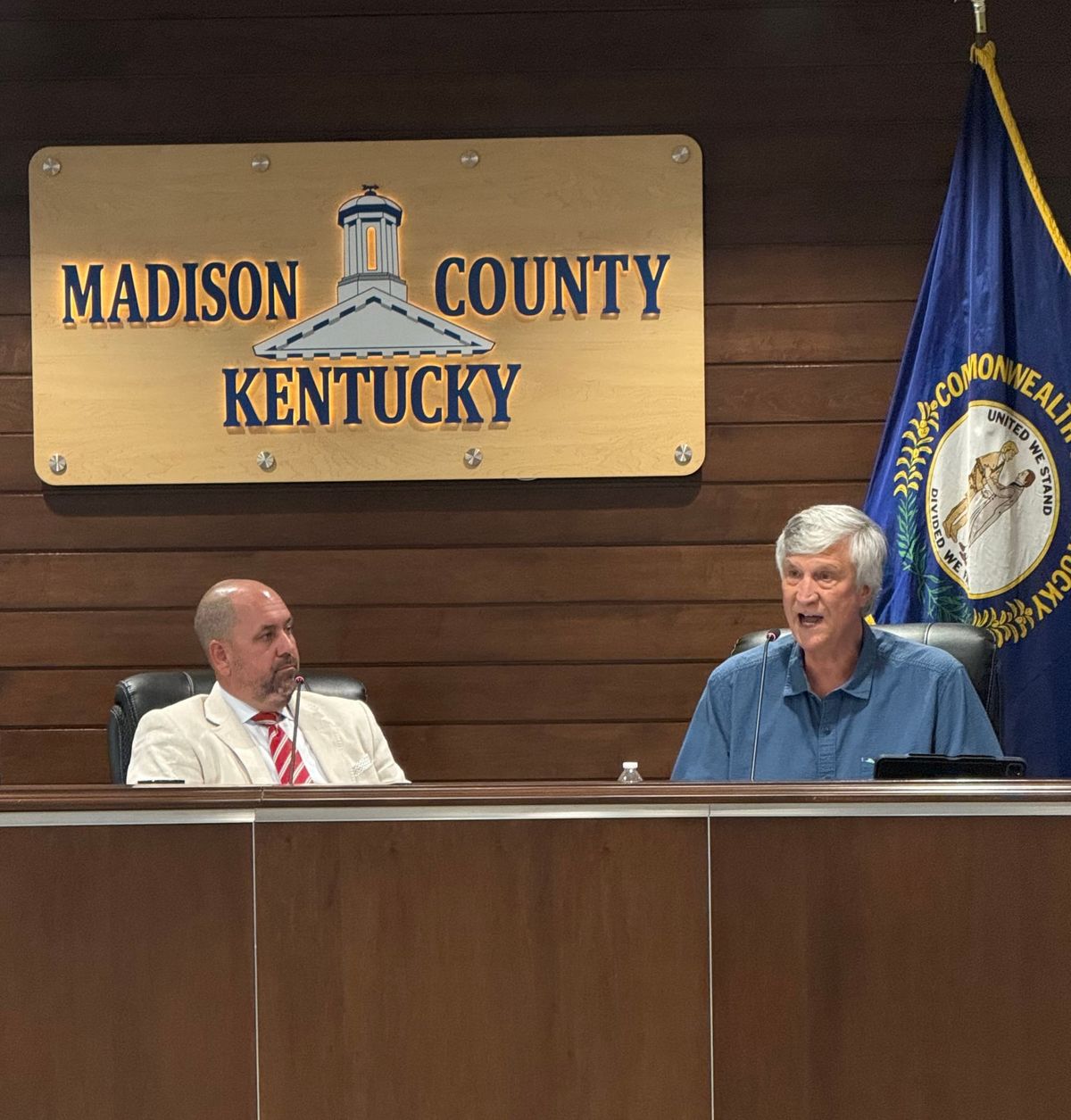
FISCAL COURT—In a standing-room only meeting on Tuesday, County magistrates approved three contentious land-use changes.
The focus of much of the Fiscal Court's first regularly scheduled meeting of the month, the votes were the most recent action on the County Planning Commission's recommendation to approve a total of six zoning changes. Three were read for the first time at the meeting, and three received final votes.
In all, the changes will rezone 1,200 acres of mostly agricultural land for business, residential and industrial development.
Discussion of the proposed zoning changes followed after the magistrates heard Planning and Zoning Director Bert Thomas give the second reading of Ordinance 2026-004, the first land-use change on the agenda that authorizes the rezoning of the 722.14 acre Carr farm off of Lexington Road in the Northern portion of the County. The change is necessary before the Fiscal Court can purchase the land on behalf of an interlocal consortium of jurisdictions that plan to turn the farm into a regional business park.
Resident Mary Lois Kearns interrupted the court proceedings from the audience and asked to address the court before the discussion. Kearns was told by Judge Executive Reagan Taylor that she could not speak at that moment because it was a Fiscal Court discussion.
Magistrate Stephen Lochmueller (Dist. 2) started the discussion, saying that he wanted to dispel "speculation and misinformation" surrounding the County's purchase of the Carr property.
“Madison County is not purchasing the property with tax-payer dollars,” said Lochmueller. “The tax dollars from Paducah to Pikeville, from Covington to Whitley City are also paying for it. Why would we not want to have the money come here rather than send it to another county?”
The $20 million necessary to purchase the property has been allocated by the General Assembly, meaning the funds are in fact state tax payer dollars.
Lochmueller also said that previous justifications against the development cannot be made by only presenting the expenses because that argument does not include projected revenues.
“Recent financial calculations that were presented publicly left out critical pieces. Maybe somebody was trying to make a political record,” said Lochmueller. “That needs to be on record so that our citizens, not just the ones in this room, but the citizens of this whole county, have the facts.” He did not specify who made the public presentation.
At the second regularly scheduled Fiscal Court meeting of July, Magistrate Billy Ray Hughes (Dist. 3) presented his calculation that, even if 1,000 employees came to work at the park, if they earned an average of $75,000, that would mean with its 1% annual payroll tax, the County would only take in $750,000 annually. This amortizes to 109 years to pay off the County's investment in the property, according to Hughes, who was absent at this week's meeting.
Lochmueller also argued that the previous public presentation did not take into account any investments made by utility providers, nor revenues generated by the sale of lots, nor net-profit revenues from the businesses and insurances and property taxes.
"We should be looking at this, not from a per-acre basis, but on a per-employee basis,” Lochmueller said.
Magistrate Brian Combs (Dist. 1) called the development a “generational impact project" saying it will provide jobs now and in the future. “This project was estimated at 3,000 jobs, not 1,000 like it’s been presented,” said Combs. He said the occupational tax is projected to be closer to 2 million dollars, but did not state the math for his calculation.
Magistrate Tom Botkin (Dist. 4) said he was basing his vote according to three criteria: “Is it legal, is it moral, is it ethical?”
“This choice, on this [ordinance], applies to all of the decisions that I am making today on every one of the zoning opportunities that’s going to come up,” said Botkin. “The same factors that apply to this one are in my decision for all of them.”
Botkin also directly pointed out the division in the audience, saying that zone changes are his least favorite act as a magistrate because of the division it creates.
All three magistrates commented on the project's 20-year or more time-to-completion.
“I hope [that] of everything that’s done here, I’ll just tell you this, I’m not going to be here to see the end results of that,” Botkin said. “History at some point in time is going to judge whether or not we’re right or whether or not we’re wrong about everything that’s done here today.”
Following the magistrate discussion, Taylor invited Kearns to address the Fiscal Court with her question. Kearns said she had documents that were "very pertinent to the vote.”
Taylor said that because this was a second reading of the Ordinance, the Fiscal Court had a legal obligation to vote on it in that session. He told Kearns she could have brought the documents to him in the days before the vote. She said she chose not to do so because she believed the documents needed public explanation.
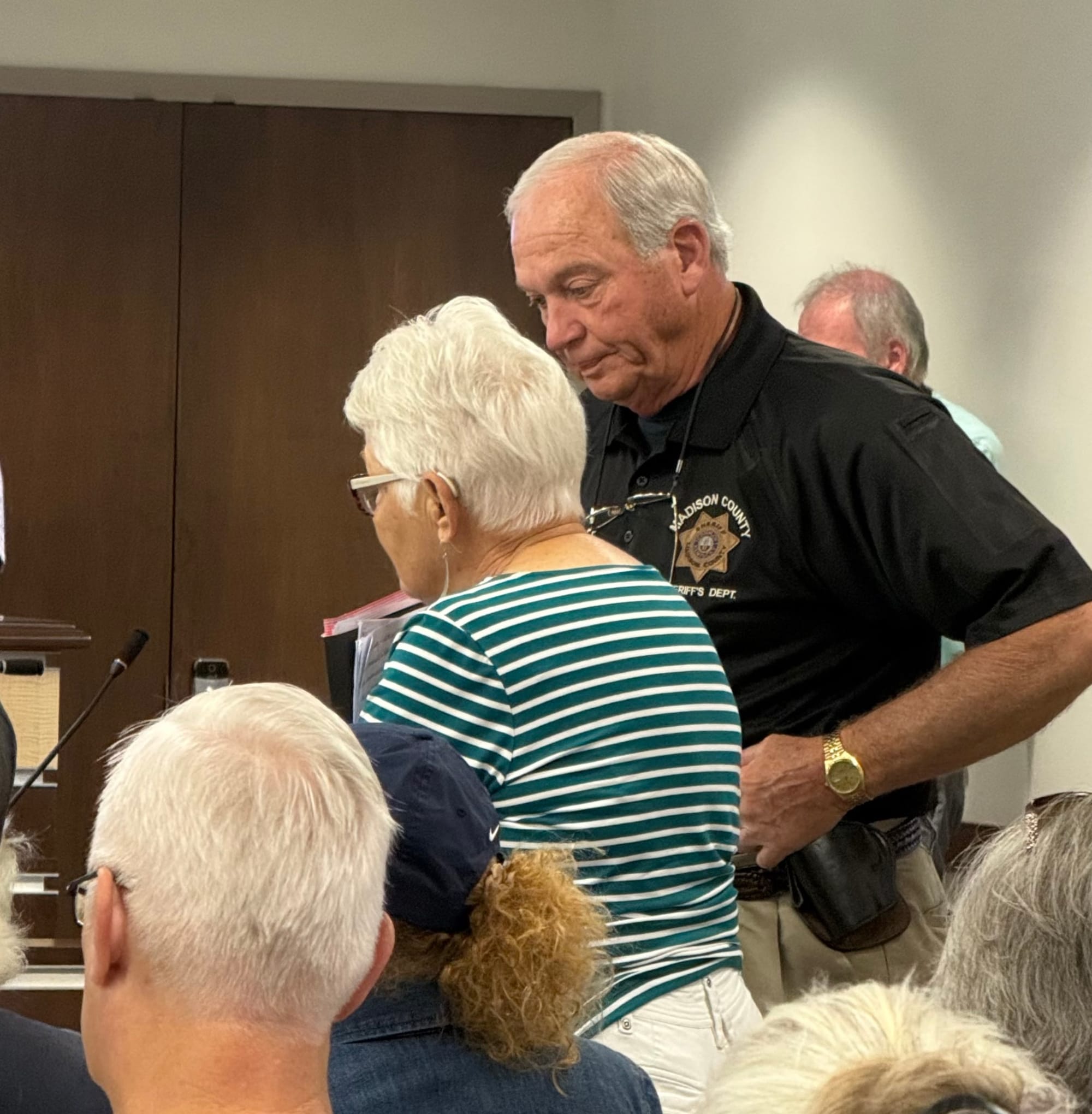
As the Fiscal Court moved to vote on whether to approve the zone change, Kearns kept speaking, saying the documents were necessary for the vote. Taylor told her that he would be happy to see them after the meeting and asked her to be seated.
Kearns refused, so Taylor asked Sheriff Mike Coyle to assist. When Kearns continued to speak, Taylor told her it was her right to share them in the public comments section at the end of the meeting. Before taking her seat, Kearns told the magistrates that their “vote would be illegal.”
After the unanimous voice vote to approve the Carr farm zone change, the magistrates also unanimously approved by voice vote zone changes for two properties on Lancaster Road, Ordinance 2026-005 and Ordinance 2026-006. There was no discussion of these Ordinances.
Also introduced were three additional zoning changes. Ordinance 2026-007 changes the zoning of a parcel at 2775 Lancaster Road from agriculture to residential for a subdivision, Ordinance 2026-008 which changes a parcel on Avawam Drive from single family residential to multi-family for a 55 and older community, and Ordinance 2026-009, which changes a parcel at 200 Moran Mill from agriculture to residential for a subdivision.
These ordinances will receive a second reading and final vote at the next regularly scheduled Fiscal Court meeting on August 25. Copies of these ordinances are available on the County's website.
During the public comment section of the meeting, Kearns questioned the land use map application paperwork, arguing that the date listed on the document does not match with the property deed’s dates. She also raised concerns that the application was not signed by the owner of the property, but by their attorney. She argued the attorney is not allowed to sign on behalf of an LLC, unless the attorney has been given power of attorney to do so.
She also said that as of Tuesday morning, the legal status of Carr Acres, LLC was “in bad standing and pending dissolution with the Kentucky Secretary of State". This means the business is legally restricted from conducting any new business, including pursuing discretionary government land-use approvals like a zoning map amendment, according to Kearns, who urged the Fiscal Court to consider the information she presented.
Several residents argued that the interlocal business park was not in agreement with the County’s Comprehensive Plan, and that the development does not fit with local history, including previous Native American uses of the land, and that it flouted concerns over local wildlife including bald eagles.
Those in support of the zoning changes, wearing "Madison County Forward" t-shirts, were also in attendance. However, no one wearing a t-shirt spoke directly in favor of the zone changes during public comment.
The Madison County Fiscal Court meets each second and fourth Tuesday at 9:30 am, on the first floor of the County Annex. For more information, including links to the live-streamed meetings, visit the County’s website.
This story was updated on August 13 to add details of Madison Forward attendees, and on August 12, 2026 to reflect that Sheriff Mike Coyle was asked to "assist" with ending the interruption of the meeting by citizen Mary Lois Kearns. Previously, the photo caption read "asked to remove her" from the meeting.
Sign up for The Edge, our free email newsletter.
Get the latest stories right in your inbox.