
Berea officials rethink Flock camera use
But severing ties to the surveillance tool's manufacturer can be tricky amid a larger federal agenda to capture local data
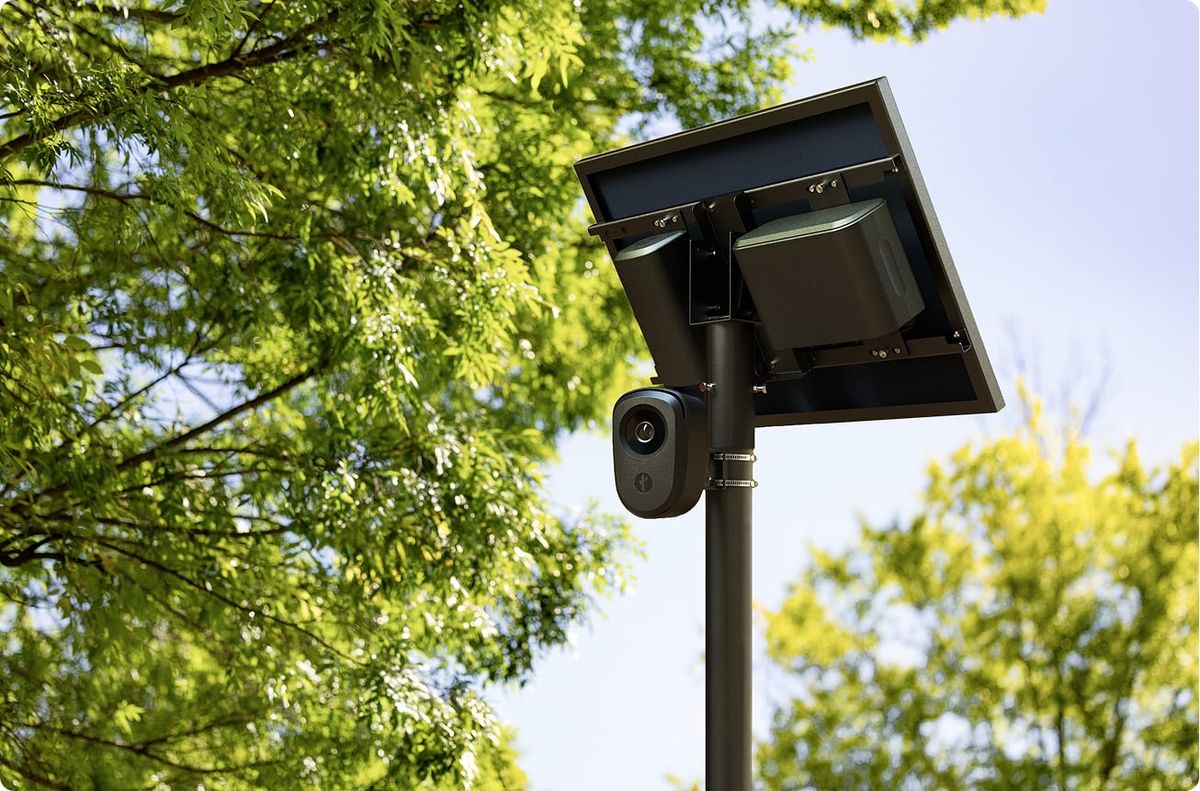
BEREA—When automatic license plate readers were installed at 10 locations across town in the spring of 2024, privacy considerations weren't top of mind in City Hall.
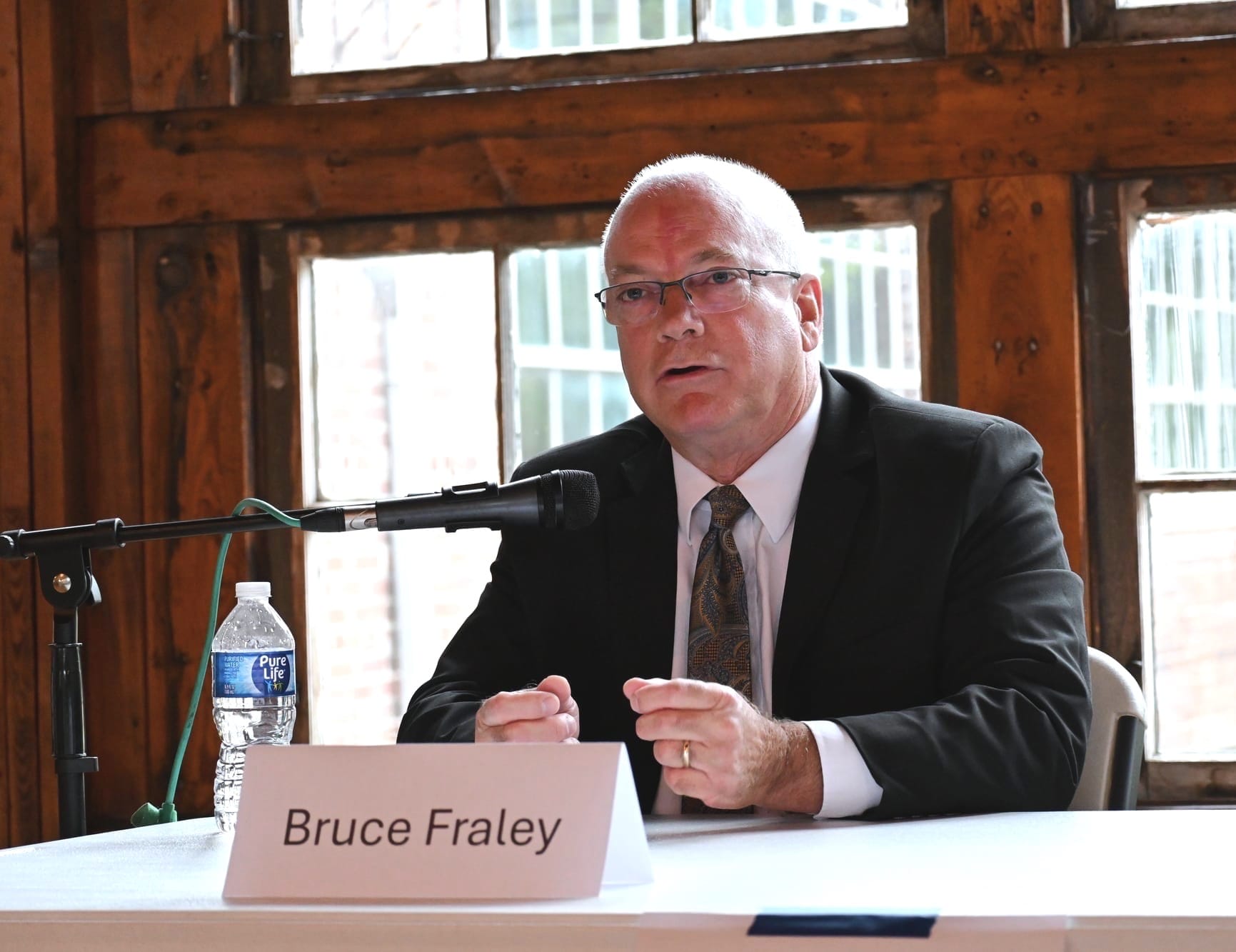
"When we first looked at using them, [we saw] them as a crime prevention, crime solving tool," Mayor Bruce Fraley said during a recent candidate forum at Churchill's.
But since then, Fraley admits he has developed misgivings about the mass surveillance technology.
"You've all been reading the same articles that call into question whether there is efficacy to keeping them in the long term, whether it is wise for us and our citizens," Fraley said at the forum.
The Edge was the first media outlet to report on local concerns surrounding the use of ALPR technology in the context of national trends, including some law enforcement officers using it to stalk and harass ex-girlfriends, and federal immigration officers using local law enforcement Flock databases surreptitiously.
But the heart of these concerns lies beyond whether the technology is used for lawful crime fighting or settling personal vendettas. Critics of ALPRs point to how both federal authorities and ALPR manufacturers have breached public trust, sacrificing the public's Constitutional right to privacy in favor of a larger matrix of domestic surveillance that has steadily increased since the Patriot Act was passed 25 years ago, ostensibly to prevent terrorism.
Now, in light of these concerns, it's possible Berea will be deFlocked.
"I've asked the chief of police, the assistant chief of police, and the city administrator to get anything that we have on Flock, and to look at what our obligations are, what equipment is installed, and what options we might have," Fraley said during the forum. "I think it deserves a broader discussion, in particular with the City Council. This is not something you just make a snap decision on in a vacuum. I think we have to look at the pros and cons."
How ALPRs work
ALPRs read the license plates of every vehicle that passes by wherever the cameras are installed. The cameras also capture a vehicle's make, color, and time and date the vehicle passed by that location.
Using artificial intelligence, the data collected by the ALPRs are continually compared to the Federal Bureau of Investigation's criminal database. If there is a match on a license plate associated with a crime, the local law enforcement receives a real-time alert that includes a still-shot of the vehicle.
Flock maintains a searchable national database of the license plates viewed and stored by all law enforcement agency subscribers. How long local data remains in the national database varies according to local agency policy. All data is owned by the agency that collected it, not Flock, according to the company's website.
Yet, as of August, while Flock's terms and conditions say the company will not sell customer data, language does suggest it will share it in order "to support and improve Flock’s products and services" and will do so in perpetuity. This is a change from a previous policy, which Flock watchers say categorically excluded Flock's right to own, manipulate, and use the data.
It is this question of who has access to the data that has been collected that legal scholars say is problematic. The Institute for Justice's Project on the Fourth Amendment references Founding Father John Adams' argument that without the right to secure access to one's property, "liberty cannot exist".
'Flocking' the undocumented
Earlier this year in Dayton, Ohio, residents demanded their city's use of Flock cameras cease after a Dayton Daily News investigation found that local law enforcement was sharing access to data with customs and border patrol, apparently without realizing it.
An internal investigation by the Dayton Police Department found that its Flock database had been used specifically for immigration-related searches more than 7,000 times for locations other than Dayton. The officer who had been responsible for setting and maintaining the search parameters locally either was terminated or resigned.
“The investigation concluded that the former division commander of the Support Services Division failed to implement the safeguards he helped develop and present in the surveillance impact report. As a result of this failure, the commander will no longer serve in the Dayton Police Department,” then Police Chief Kamran Afzal said during a media briefing in May.
Flock official policy states the company does not explicitly intend to support immigration enforcement. "Local control is a core design principle," the statement reads.
Berea Assistant Chief of Police Aaron Boycan told The Edge earlier this year that the BPD will share its Flock camera data with federal agencies only if there is an active investigation. "So, for example, if there were a child sex trafficking investigation, we might share an image, but we would not share our log-in information," Boycan said.
Still, despite Flock's categorical denial of claims the company supports federal customs and border patrol agents, an investigation by a local Denver, Colo., television station last year found that Flock had in fact been running a pilot program that gave the agents direct access to its national database.
The investigation also found that none of the local law enforcement agencies whose local databases had been searched by federal agents in the pilot program were aware their databases had been searched. When Flock officials were asked about the pilot program, they said the company had "communicated poorly."
Flock also admits that it does have "established federal customers, including National Parks, Veterans Affairs hospitals, and military bases."
Further, an analysis by the Electronic Frontier Foundation found that federal law enforcement officials use Flock data to monitor those who protest federal deportation raids.
Best practices
In early 2024, after Berea officials signed the $30,000 contract with Flock for its annual subscription and maintenance fees, Berea Chief of Police Jason Hays made a public announcement about the ALPRs at a City Council meeting, reassuring residents that none of the data collected would be warehoused, sold to a third party, or used to fine or ticket citizens.
To ensure these policies, guardrails around use of the technology by the Berea PD include periodic internal reviews of who has accessed Flock's nationwide data collection system using the Department's log-in credentials, and what kinds of searches they conducted, according to Boycan.
Berea's Flock use policies are consistent with the best practices outlined in a state law that took effect this summer, standardizing how ALPRs are used by law enforcement across the Commonwealth. State legislators passed the law on the heels of multiple national reports of some law enforcement officers abusing their access to the technology.
A Washington Post investigation published in August found that at least 50 law enforcement officers in the US have been accused of or charged with using the technology unlawfully, including to stalk former wives or lovers.
Cost/benefit question
Flock claims it has installed 120,000 ALPRs nationally. Fifty rogue cops is equivalent to just 0.0416% of that number. These statistics might beg the question of whether it is worth the trouble to dismantle the cameras if less than a half of one percent of law enforcement with access to the technology abuse it compared to the number of cameras in use.
Especially if the cameras are helping to solve crimes.
In April, Boycan provided The Edge with data showing the Flock ALPRs had assisted in solving seven crimes in the first quarter of this year. And although the Louisville office of the FBI won't confirm it, several unofficial sources with knowledge of the situation told The Edge that ALPRs helped identify the vehicle driven by the suspect in the murders at the US Bank branch in Berea, leading to his capture.
"I believe these cameras, hands down, make us better at our job," Boycan said.
But at least one city official wonders if that line of thinking needs interrogation.
"We often point to these cameras as the only reason crimes are solved, stolen vehicles are found, or whatever," City Councilmember Katie Startzman told The Edge in an interview this week. "But, maybe it just makes things faster. Our police department already has a good record of fighting crimes. I think the question is what is the cost/benefit analysis on these cameras. Is having them worth the risk to our privacy?"
"Flock cameras are only focused on a public street and see things that are viewable by anyone in the public. That's been a long-held thing in the court, that it's not a matter of privacy, not an invasion of privacy to see that plate and run it," Boycan said during the interview earlier this year. "So, is it unreasonable under the law? It is not."
Boycan's views do not align with that of legal scholars at the Project on the Fourth Amendment. "Unreasonable search and seizure", they write, is any surveillance or search conducted without a warrant for the purpose of gathering information. That a camera would be collecting data on persons unaware they are being surveilled is not in accordance with what the framers of the Constitution intended, the legal scholars argue.
"That is why the [Fourth] Amendment broadly protects us against government power to intrude on our persons and property at will," the Project's authors wrote. "The Framers had just fought a revolution against the King’s general warrants and writs of assistance; they wanted to prevent any chance their own government would commit the same abuses."
Backdoor data collection
Flock Safety Corp. is just one of several such surveillance technology providers. Axon, maker of the Taser, also makes ALPRs that connect to a suite of products that maximize an agency's surveillance capacity. Often times, municipalities will "deFlock" only to then sign on with another ALPR company promising better privacy controls.
Yet, federal authorities continue to devise end-runs around any privacy pledges offered by surveillance companies, nullifying any protections local governments are led to believe they have in place.
Earlier this week, reports emerged of a secretive initiative to funnel all ALPR data collected locally into a federal database with no clear line of oversight other than the executive branch. The data is sometimes passed through with no prior authorization, and other times using memorandums of agreements that local agencies must sign with federal drug trafficking enforcement agents operating in any given local jurisdiction.
Under a grant authorized by the White House earlier this year, the local ALPR data is being transferred to servers run by the awkwardly named task force, High Intensity Drug Trafficking Area. The executive action calls into question whether HIDTA is itself a legal agency. Previous designations of HIDTA, which is overseen by the White House Office of National Drug Control Policy, are that it is not a legal entity. Without legal status, it is unconstitutional for any agency to hold and manage funds.
The executive action also nullifies any privacy protections extended by ALPR manufacturers.
"When local police and private vendors promise community control over surveillance, they obscure a broader agenda," Chris Van Pelt, creator of the website, HaveIBeenFlocked.com, told 404 Media. “The DEA [Drug Enforcement Agency] and ONDCP are already aggregating local data behind the scenes. This bypasses democratic processes entirely. The public has made it clear that mass surveillance violates fundamental rights, even when it is laundered through fragmented systems, private companies, and regional task forces.”
Congress wants expanded surveillance
Municipal governments are not the only customers of ALPR technology. Corporate retailers like Walmart also use the AI-assisted cameras as part of their theft prevention strategy, as do home owner associations, school districts, and a range of other public and private organizations for the stated purpose of crime prevention and detection. (Ed. note: Madison County Public Schools Chief of Police Ben Wilcox told The Edge in a text that at present, his department does not use ALPR technology.)
Private organizations do not need any permissions from local authorities to install ALPRs, whereas local law enforcement agencies do, according to Hays.
"As a government agency, there was an approval process for our department (Berea PD) to obtain and use Flock cameras. The City Administrator and City Council approved the use of Flock for our City after we presented the opportunity to them and explained their use," Hays wrote in an email to The Edge this week.
What these private organizations see when they log into their Flock database is not the same as what the police see, according to Hays.
"Those businesses would not have access to law enforcement related information [in] the Flock ALPR system," Hays told The Edge in the email.
But Congress looks set to authorize federal control over the private collection of some ALPR data.
A bill currently making its way through Congress would expand corporate retailers' surveillance capacities with the aid of expanded federal assistance. Retailers already have access to federal ALPR grants, but the Combating Organized Retail Crime Act (CORCA) (H.R. 2853, S. 1404) would increase funding, and would authorize the creation of the Organized Retail and Supply Chain Crime Coordination Center.
The Center would be overseen by the Department of Homeland Security, and would report directly to the director of Immigration and Customs Enforcement, according to the bill.
Private 'eyes'
As for local law enforcement's ability to contain and control use of ALPRs, numerous examples exist where local permitting protocols have been circumvented.
Among the latest such examples is in St. Lucie County, Fl., where authorities recently discovered at least 14 Flock ALPRs installed across the city of Ft. Pierce, including in quiet residential neighborhoods. None of the devices had been authorized by county officials.
An investigation found that three of the cameras were being monitored by the local sheriff's office, although the sheriff didn't explain why they hadn't gotten the necessary permits for the cameras.
Who is monitoring the remaining 11 cameras remains a mystery to local officials who have posted notices on the Flock camera poles, demanding the cameras be uninstalled by October 20th of this month.
Hard to 'deFlock'
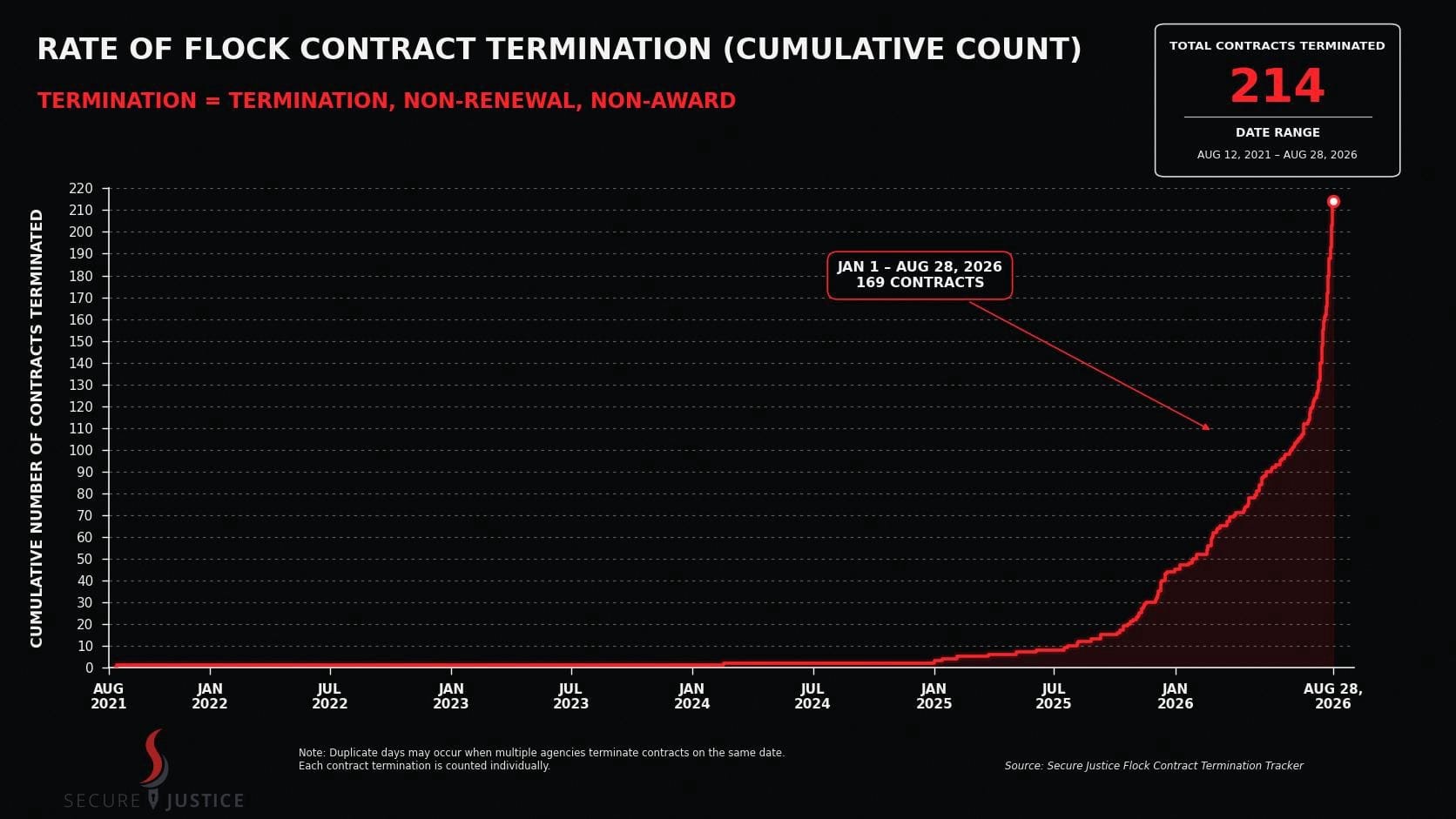
Spooked by these events and others like them, many municipal leaders nationally have sought to end their contracts with Flock Safety. Some are learning it's not so easy to do.
After multiple unsuccessful attempts to get the company to dismantle the Flock ALPRs installed across their community, city officials in Verona, Wis., took matters into their own hands.
"They weren’t removing them,” Verona Mayor Luke Diaz told the Wisconsin Examiner, a sister publication to the Kentucky Lantern. "We kind of looked at the contract, talked it over amongst staff, and the thing we felt most comfortable with was just covering them so they could stop spying on people.”
Questions over whether the city's contract with Flock prevented them from dismantling the cameras themselves—Flock surveillance equipment is rented from the company, not purchased—eventually led Diaz to order his public works department to cover the cameras with black trash bags and duct tape.
A protracted series of back-and-forth email communications between Verona city officials and Flock ensued over the course of several months. The cameras were ultimately removed, but not until after Flock explained that the city needed to undergo a "defined offboarding process" did the company deactivate the cameras, even though by that point they were covered in trash bags.
A similar situation arose in Evanston, Ill. where city officials thought they had terminated their contract with Flock, only to discover the company had reinstated the cameras after the supposed termination. Officials there had the cameras taped and bagged until they were ultimately removed.
Verona city officials stressed to the Examiner that they had utmost confidence in their local police, but that they objected to federal immigration officers using Flock data to track the undocumented.
For Verona officials, however, fears that Flock Safety would override any parameters set by local law enforcement, forced their hand.
“Unfortunately, Flock is not trustworthy, no matter what kind of guarantees they have given you,” Verona Council President Mara Helmke told Verona police officials in a city meeting.
In response to such criticism, in August, Flock changed its default data retention setting from 30 days to seven and added audit triggers for suspected unlawful use of the database. The company also added a "transparency portal" where local agencies can upload their in-house policies, along with what searches have recently been conducted using the database, and by whom.
But the company also added language making it more difficult to terminate contracts to use its products, even if local elected bodies do not reauthorize funding for the contracts. Flock also extended wording around its immunity to law suits, while placing the burden of paying for their litigation on the taxpayer.

Chorus of disapproval
Whether or not Berea will cease use of ALPRs is still unknown, according to Fraley, who confirmed in an email that as of yet, no public discussion about ALPR use has been set with the City Council.
"The police department is reviewing everything now and we will move forward once their review is complete," Fraley told The Edge in the email.
During the forum, none of the candidates present expressed support for the use of Flock cameras.
"When I first started paying attention to these Flock cameras, I was really pissed," mayoral candidate Ricky Clontz said. "I was thinking, 'Well, that's stepping all over us. But, I would like to help the police force. I've got their back. I want to support them. I want to take it to the city, to the people, to be able to tell us what they want as a whole. Then, with the voices we've heard, we should sit down and put that together."
Incumbent City Councilmember John Payne, who was in office when the City signed the contract with Flock, said he'd been researching what is happening nationally when it comes to use of the technology. "I have a very strong, healthy skepticism of Flock cameras. I have discussed it with other Councilmembers and with the mayor. It's worth looking into how our city is utilizing it, and making sure that we have strong restrictions on how they are used."
Payne also said that speaking with leaders in other communities in other states would be helpful in order to learn more about the rationale for keeping or ending use of the technology before taking action.
One candidate spoke categorically about not using the APLRs.
"I'm essentially not willing to give up our citizens' liberty for a sense of security," City Council candidate Alex Sipple said.
Sign up for The Edge, our free email newsletter.
Get the latest stories right in your inbox.