
A regional business park is a good idea, but the County's model is wrong
The political class strikes again
ANALYSIS
The Fiscal Court's plan to build a regional business park is a good idea, but it is being poorly executed. The problem is with the argument that the only place the park can be located is on the Carr farm.
We do have a model for what's right, however. It's the regional business park campus in Berea, as well as the Berea Industrial Park as a whole.
Here's a thumbnail sketch of the Fiscal Court's latest escapade and the fury it has provoked. The Fiscal Court plans to purchase what is locally known as the Carr farm and cede control over to the Central Kentucky Regional Business Authority, which is the board appointed by the elected leaders of four jurisdictions that in late 2024, came together in an interlocal agreement to share industrial resources. Those four are: Madison, Fayette, and Scott counties, and Berea. If you really want to know more, search "CKBPA" in our archives.
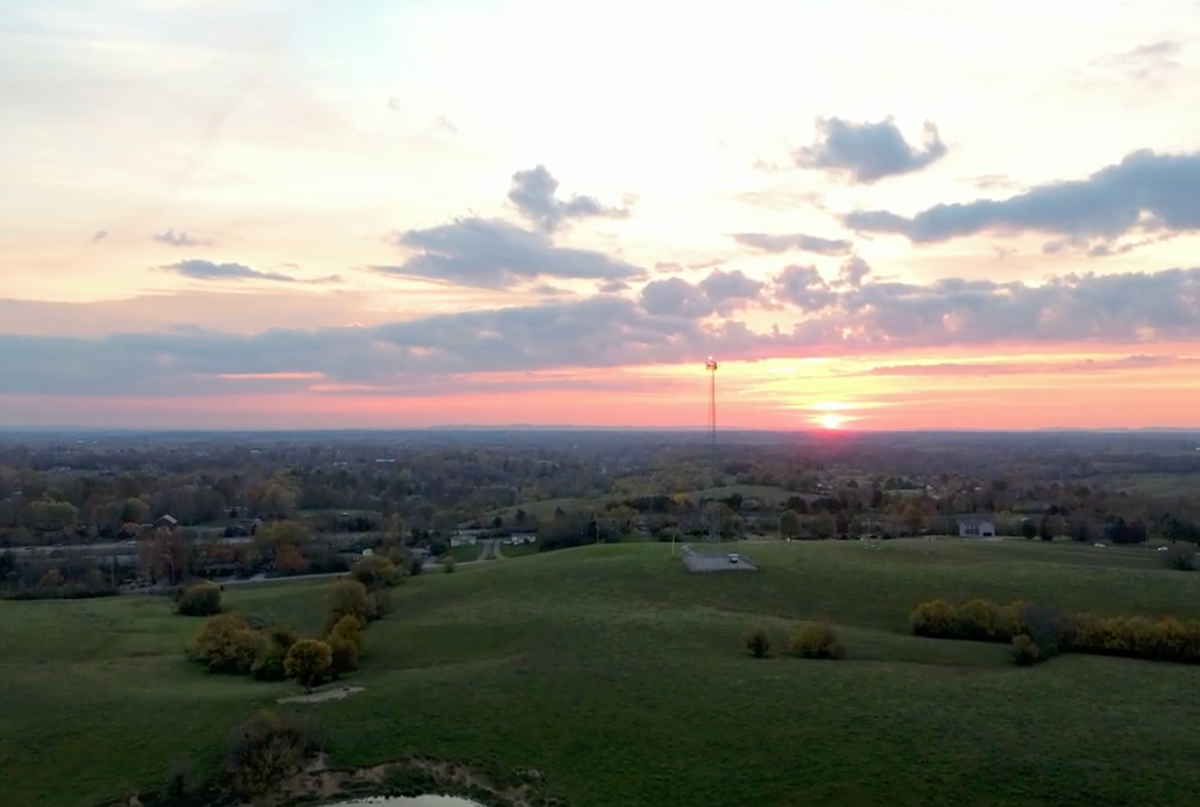
The Carr farm is just over 722 acres of the last remaining large operator cow-cattle contiguous pasture land we have left in the County. If you've ever driven north on Lexington Road between I-75 exits 90 and 95, you've driven past this expansive, notably undeveloped and beautiful. The road in front of that patch is treacherous and that both the County's assertion that the traffic there can be easily managed in that spot is specious.
Team Carr farm says the scheme meets the County Comprehensive Plan's contingencies. But that Comprehensive Plan is currently up for review, and a lot has changed since it was written during covid.
Team Carr farm also says this is the only way the County has to generate necessary revenue since it's no longer coming from the Blue Grass Army Depot. As proof, Team Carr farm keeps bringing us all back to the fact of the state having given the CKBPA $20 million this year to buy the property.
This week, during the County's last Planning Commission meeting, the members of that board voted to recommend the zone change necessary to advance the sale. Before the vote, many people spoke at the meeting both for and against the Carr farm plan. After the vote, angry residents broke the internet.
This analysis is the distillation of a few days spent piecing together what was said, then banging it all up against what The Edge has reported to see what falls apart.
Three things shatter the pro-Carr farm argument. The first is something Berea Mayor Bruce Fraley told me while I was working on The Edge's investigation into the Carr farm deal. The second is the $1 billion Mitch McConnell, MIA, has ensured will splash across BGAD in the next decade. The third is my years of experience analyzing process improvement initiatives.
Find the dysfunction
Back in the day, I had a side business writing case studies about process improvement initiatives for hospital nursing staffs. The goal of these projects was to identify what made patients better faster, and to root out what harmed them. The template we used to identify problems and solutions, and then track the results of the system changes, was based on automotive manufacturing troubleshooting techniques developed by the Japanese.
Here's the template:
First, see the current big picture according to the sum of its parts and compare it to the desired outcome. Then, identify where the dysfunction is preventing the desired outcome. Lastly, determine what support is needed at the pain point to create lasting change. If it's not a matter of adequate resources, then ask whether it's a question of the wrong person having been hired for the role, or if the person's role is even necessary.
Also, it's important to evaluate any previous attempts to fix the problem and ask why the measures failed. It might mean there is still more dysfunction to uncover, or that the wrong solution was applied.
Quality of life at stake
Through that lens, we can see the big picture here is indeed that there are gaps in the Fiscal Court's capacity to maintain the current quality of life in the County. The desired outcome then, is to plug those gaps.
Quality of life is a subjective measure, but let's use the definition asserted by County Planning Commissioner Mary Eipert at Tuesday night's Planning meeting.
At its most distilled, Eipert's argument was that quality of life can be defined as having enough jobs to collect enough revenues from occupational taxes to pay for essential services. This is a solid argument.
She also said that if there are good opportunities for the next generation, then families can stay together, which is true, and is the type of thing that many count as essential to their own definition of what a quality standard of living looks like.
Job losses pain point
In addition to understanding what's at stake (quality of life, to be clear), we need to understand what has changed in the system that is working against the desired outcome. It's the completion of the chemical weapons decommissioning project at BGAD which has led to the loss of +/-1,500 taxable jobs in the County.
The County charges 1% net profit tax and 1% payroll tax for all work performed in Madison County, with a few exceptions such as for nonprofit organizations. Without those 1,500 jobs that's potentially millions in lost revenue over time.
Thinking about all the little parts that make up the whole, as our template requires, we might wonder why this wasn't more urgent to County officials a decade ago. But apparently it wasn't. Anyway, job loss is the pain point.
Success stories
Since there are no previous attempts to fix the problem for us to examine, only the current suggested solution to build on the Carr farm we need to look at how other organizations facing similar problems resolved their pain point. For that, we have the Berea Industrial Park where there are two instructive case studies.
The first, ironically, is the Berea campus of the CKBPA (again, that's the Central Kentucky Regional Business Authority). Because leadership in Berea chose to site the campus in an already established business/light industrial park, there was zero controversy. As in, none.
The County doesn't have a regional business park, and that is why the Fiscal Court is arguing it needs to build one. But in its attempts to address the pain point of lost revenue, the Fiscal Court has created a new pain point for itself—furious opposition, as evidenced by recent election results.
The success story here is not that Berea had a pre-existing place to site something for the CKBPA to leverage. It's that when Berea offered to participate in the interlocal deal, no one's hair caught fire.
The take away for our process improvement analysis of the County's handling of this should be that building a regional business park is not the issue, broadly speaking. It's the location the County has chosen.
Offering more opportunities to workers throughout the region is one of the stated goals of the CKBPA. Again, let's look to Berea. Without any interlocal agreement, Berea already attracts 1,700—fully half of the entire workforce employed in the City's entire industrial park—primarily from Scott and Fayette counties.
Regionalism does work, with the caveat that it does somewhat undercut Eipert's suggestion that it keeps families together because successive generations don't have to leave the county to find a job. With regionalism, it's a foot in both worlds with people living in one county and working in another. Some people like to commute, some would rather not. That's part of the subjective nature of assessing quality of life.
But this second case study also begs the question, why can't Berea's local workforce fill all 3,500 jobs? The answer to that is our local workforce has not traditionally been geared toward advanced manufacturing, but that is changing.
Bringing regionalism home
The part of the template where we examine why any previous measures to address the pain point failed, or in this case, why the only measure we have been told will work, the Carr farm plan will fail.
It will fail because it is the wrong version of regionalism for what the County's resources are available to support. It was advanced by the Carr farm team at the Planning meeting that there is nothing about a land use project that can't be solved by dollars and dynamite.
The Carr farm can't support what needs to be done. The Fiscal Court's own eye watering estimate for what it will take to make the site shovel ready is $63 million. Why isn't that alone being addressed openly by the Fiscal Court?
The right version of regionalism would have been to rely upon the same three jurisdictions that have had to figure out how to work together for decades: Richmond, Berea, and Madison County, and leverage the same resources we all look at, drive on, fight over, and most importantly, know how to cost share to provide, even if we fight some more. We don't know who is for or against us in Lexington.
Across both City Halls and the Fiscal Court, we already know how to grift and hate each other and still work together at the same time. And if we were all enjoying a raised baseline quality of life as a result of bringing regionalism home, our halls of power might fight less.
During the County Planning Commission meeting this week, one resident who spoke during public comment asked why available space in either of the industrial parks in Richmond or Berea couldn't be filled before building a brand new park. She was told by Team Carr farm that it's because those are in Richmond and Berea and aren't available to the County.
But they might have been if the right version of regionalism had stayed the focus. And so might have been the Begley Property—which is double the size of the Carr farm and which is already desperately being pimped out by the state, especially since Project Nora failed to land there. Meanwhile, the Begley site is obliquely being marketed as a potential data center site despite its current lack of grid capacity, but we already know from Project Nora, that it could support other industrial activity.
It would be naive to believe that site selection teams for data center developers have not been eyeing what happens in Madison County. These people have sophisticated systems for tracking all available potential industrial and/or data center parks nationally.
Despite my reporting at face value Judge Executive Reagan Taylor's claims the County hasn't been approached with a data center deal, it's likely someone at the CKBPA has at least gotten a phone call.
The keystone of Team Carr farm's argument put forth by consultant Lucas Witt is that the state rewards regionalism with greater pay outs for product development initiatives. That's why the CKBPA got the $20 million to buy the land (see Project Nora).
The political class strikes again
Why was the wrong version of regionalism what we ended up with? Here's what Fraley told me. The original plan for the regional business park was derived years ago. It was just Fraley, Richmond Mayor Robert Blythe, and Taylor doing the talking.
Yet, Taylor went to Scott County and got them and Georgetown involved. Then he and Scott County Judge Executive Joe Pat Covington called on Lexington/Fayette where commercial land is scarce and Mayor Linda Gorton would have been an outright fool to not sign on, so it's hard to blame her and her 13-0 member Council for being in favor of it. Then all hell broke loose and residents in Richmond demanded out and won, Georgetown residents wanted out and won, and now Madison County has a new incoming judge executive.
Why did it all have to be so big?
This political class overlay of itself on what should be a local and county decision-making process is the not-so-hidden dysfunction that interferes with our progress toward the desired outcome. Witt is a line item in Berea's budget. He gets $60,000 annually.
CommerceLex meanwhile, charges its members—which includes each of the four CKBPA members—to put together expensive marketing materials. CommerceLex charges jurisdictions a dollar per citizen to join.
In return, Andi Johnson, who is CommerceLex's chief policy officer, claims they effectively sell the region to potential economic development investors. I heard her say that at a work session for the Berea City Council at the end of 2024. I never heard her say that at a public forum where it was announced ahead of time that she would be saying just how much it costs for her organization to market Berea to site selection companies that are already looking here.
CommerceLex pitches to the very same site selection brokers who are already sniffing around and don't need glossy brochures or dopey, self congratulatory videos based on made-up civic participation awards to determine if a site is what they are looking for.
What both site selection brokers—and residents—actually need are well-organized business development departments where residents can attend their meetings or at least talk pretty much at any time with its staff.
This is something which the County does not have, but Berea and Richmond do. And there are signs that Richmond's is about to get better organized, given the announcement last week that City Manager Rob Minerich seeks to move the Richmond Industrial Development Corporation, another middle management organization, in-house.
BGAD still in play
And after all that, the truth is that BGAD is still in play. The Department of Defense was just here scoping out what it needs to do to set up the new industries it has already promised are coming thanks to the more than $1 billion that McConnell managed to snag for the Depot.
There will be some lag time, since the site will need to go through some kind of environmental review, but BGAD has indicated we're talking maybe 2030-ish is when construction on new facilities will begin on operations that will need skilled workers to do things like manufacture shipping containers that can withstand being dropped from helicopters in-country, and to develop drone surveillance technologies.
It is less risky to rely on federal dollars to come through for defense industry jobs any day over vague promises. Plus, DOD jobs aren't going to be minimum wage warehouse runner jobs. Plus, the timeline we're told will help turn the Carr farm into a prosperous business park is the same as BGAD's or longer.
The same old same old
As for property rights, yes, the Carr siblings have the right to do whatever they want with their inheritance. Budd Carr has said there were no next generation farmers who were coming up through the ranks who wanted to farm the land. Had they actually listed the farm on the open market under its current zoning, they might have been pleasantly surprised. Or at least, surprised.
Which is another dysfunction in the system: zoning and land valuation. If there were less incentives for the Carrs and others to list their farms as industrial parks and more incentives for them to do anything else, they would have a greater range of profitable options to choose from, and the community that has to look at whatever gets built and drive the congested roads it creates might not be waving their pitchforks at the Fiscal Court every damn time it meets.
As it stands now, the appraisal of the land itself says the $19 million dollar price tag is contingent upon it being zoned industrial. So, this means the County has the power to offer other structures of land classification and revenue generation, which I have already covered in my previous argument in favor of a land value tax.
If we continue to reward land speculation—the Carr siblings are land speculators who happen to be the descendants of farmers; the Carrs lease out the farm—then communities as a whole will have far less power over what happens to their quality of life than if we reward developers doing what is best for everyone.
This analysis strongly suggests that creating structures that support local regionalism would be the path forward for achieving everyone's desired outcome, a sustained and even improved quality of life.
And that the argument made in favor of tabling the zoning change until more information contained in the arguments against purchasing the Carr farm for development can be reviewed, are, in the aggregate, sensible. Just by saying that traffic issues have been addressed doesn't make it so (see investigation).
Odds are good that with adequate sunshine on the facts, the political class's influence over how regionalism is expressed in Madison County will wither on the vine and we'll get back to fighting amongst ourselves while living better lives.
This analysis was updated for clarity and accuracy on August 12, 2026.
Sign up for The Edge, our free email newsletter.
Get the latest stories right in your inbox.