
National grocer moves closer to finalizing plans for Berea location
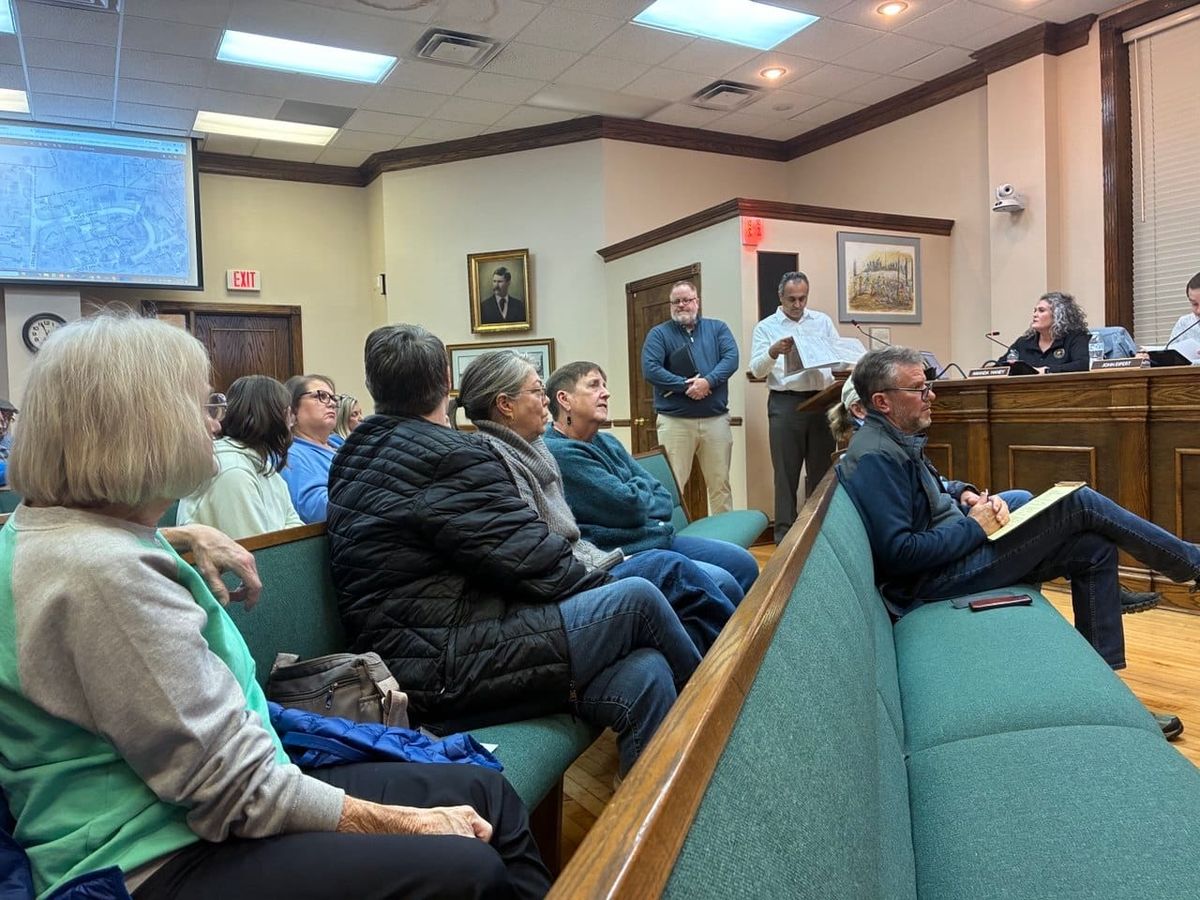
BEREA—A zone change for a mixed-use commercial development which will feature a national grocery chain was unanimously approved by the Planning and Zoning Commission during Tuesday night's regularly scheduled meeting.
Chair Ben Robinson and Commissioner Andrew Gardner abstained from voting because they own or have a stake in property in the area, a representative from the Planning and Zoning department told The Edge in a brief interview. Vice Chair Martin Richards acted as the chair during the meeting instead of Robinson, the representative said.
Approximately 35 acres of land was rezoned from R-1, single family residential, and agriculture to B-2, major business district. This is in addition to the 21-acres of land that was annexed into the City for the project last month.
The justificationS for the zone change were "major economic, social, and physical changes" which were not anticipated at the time of the previous comprehensive plan's finalization, according to the grocery store project engineer, Jihad Hallany, president and principal of Vision Engineering in Lexington.
Hallany told the Commission that a 50-foot buffer would be placed between the existing residential neighborhood and the planned commercial area. A single family residential area portion of the new development is planned to abut residential areas along Otis Street, Vanhook Court, and two lots on Circle Drive, according to Hallany.
Gardner asked if the area at the end of Pine Street would be connected to the project. Hallany said that it would not connect to any existing residential neighborhoods and would only connect to the Kenway Street extension, which will serve as an egress onto the bypass as previously reported.
Because the development will be on a state road, the Kentucky transportation cabinet must review the development's intended traffic patterns. Richards asked for an update on the state's review of the project.
The project is dependent on completion of the Kenway extension project, according to Hallany, who said that a traffic study has been completed for the state’s review, but that it can only be submitted after P and Z approves the zone change.
Once the traffic study is approved, turn lanes and other traffic systems and the plan will be submitted to the City for review. Once City staff have reviewed the plans, P and Z will vote on whether to move the project forward.
Many residents from neighborhoods adjacent to the proposed project site received false information that Pine Street would be extended and serve as a second connection point to the development.
Resident Sheryl Thomason, who lives at the end of Pine Street, claimed that a "man with a cigar" had informed of this her while putting up a sign about the project. It could not be confirmed whether this man was a City employee, however Codes and Planning Administrator Amanda Haney, who was at the meeting, apologized if any information had been conveyed incorrectly.
Hallany explained that the developers had no intention of extending Pine Street and would not want to because the topography of the area made it impossible. Additionally because Pine Street is less than 50 feet wide, a right of way would have to be purchased with approval from property owners, he said.
Erik Lettig, attorney for Berea Development HP, LLC, said that the Commission could ensure the developer does not extend Pine Street through a binding element when they vote on development plans.
The Commission's decision to proceed with the plans was met with public concern from a packed house.
During public comment Thomason expressed her concern that the residential portion of the project would include public housing and asked if a liquor store, schools, church, mosque, or Dollar General would be built there.
Lettig replied that none of those would be built and that the land is deed restricted by the national grocery chain anchoring the project. Hallany said the developers cannot stop an individual from buying a house and turning it into public housing. However, that individual would need to obtain City approval to do so, he said.
Gardner asked if it was possible that the proposed residential area would have townhomes instead of single family housing. Lettig said that the developer’s intention is to build single family housing but if the deal falls through, it is possible they might pivot to a different kind of housing.
Jennifer Sandefur, a resident in the neighborhood, complained that the process seems unfair.
“After you all vote for the zone, we can’t control what [development is] coming in there, that’s what we’re hearing,” Sandefur said. “It feels like this is the first step towards the end for our neighborhood.”
Richards clarified that the Commission was only voting to approve a zone change and there would be further opportunity for public comment when development plans are submitted to P and Z for approval.
Commissioner Stephanie Hembree said that the City always had the goal of creating the Kenway extension, which is key to the project, for safety reasons since the Dixie Park and Rose Lawn subdivisions do not have a second exit. In the event a disaster happens, residents would not be able to exit the area quickly, she said.
Crystal Lawson, who lives next to the area where the Kenway extension is being constructed, expressed concerns that additional traffic flow would endanger elderly residents and children in the neighborhood. She was also concerned that the new development would lead to water runoff toward her neighborhood.
“So are we going to be like Richmond, and start growing and growing and growing and not have any farmland?” Lawson asked.
Another resident, Carol Morgan, said that the Commission needs to consider people who live there and that she wanted the neighborhood to remain the same way it was when she bought her house.
Comprehensive Plan
The Commission also adopted draft goals and objectives for the most recent iteration of the Comprehensive Plan. City Council will hear a first reading during the next regularly scheduled meeting on December 1.
Language was changed in the draft to encourage but not mandate certain actions, according to EHI Project Manager Ryan Holmes, who was contracted by the City to oversee the 2025 Comprehensive Plan.
For example, the statement “maintain an updated inventory of historic properties and landmarks” was changed to “work toward an updated inventory of historic properties and landmarks,” Holmes told the Commission.
Other changes based on feedback from P and Z, the advisory committee, and comments submitted through the website, included adding a guidance statement that explicitly says the City is not committed to fund, build, or adopt any of the goals and objectives, as well as removing the “town-gown” section.
The town-gown section was originally meant to strengthen the relationship between the City and Berea College, as previously reported by The Edge.
“We realized the importance of Berea College and what that means to the City, but through dialogue and back and forth and engagement, we heard that might not be an appropriate way to recognize that relationship through its own separate chapter,” Holmes said.
Objectives previously under the town-gown section were moved under different categories, such as placing student volunteering under the community well-being section, Holmes said.
To gather input on the Plan's formation, EHI conducted a general survey as well as a youth survey, and hosted three public meetings and a booth at the Spoonbread Festival, Holmes said. The response rate from the public was around 4% to 5%, which is higher than other communities EHI has worked with, he said.
A member of the public asked where information on the Plan could be found. Holmes said they could go to the Comprehensive Plan’s website.
Another citizen asked how surveys were distributed. Holmes said it was advertised online and through their community engagement events.
Commissioner John Eipert said that the general survey received 468 responses and the youth survey received 72 responses.
Richards said that community input was important to the Commission and thanked EHI for putting in the effort to engage the public in the process.
These are some highlights from the November 24, 2026 Berea Planning and Zoning Commission meeting. The next meeting will take place on December 8, 2026. To watch live streams or previously recorded Planning and Zoning meetings, visit the City's YouTube channel and choose the "live" tab.
Sign up for The Edge, our free email newsletter.
Get the latest stories right in your inbox.


