
Despite horrors of war, bonds of international friendship endure
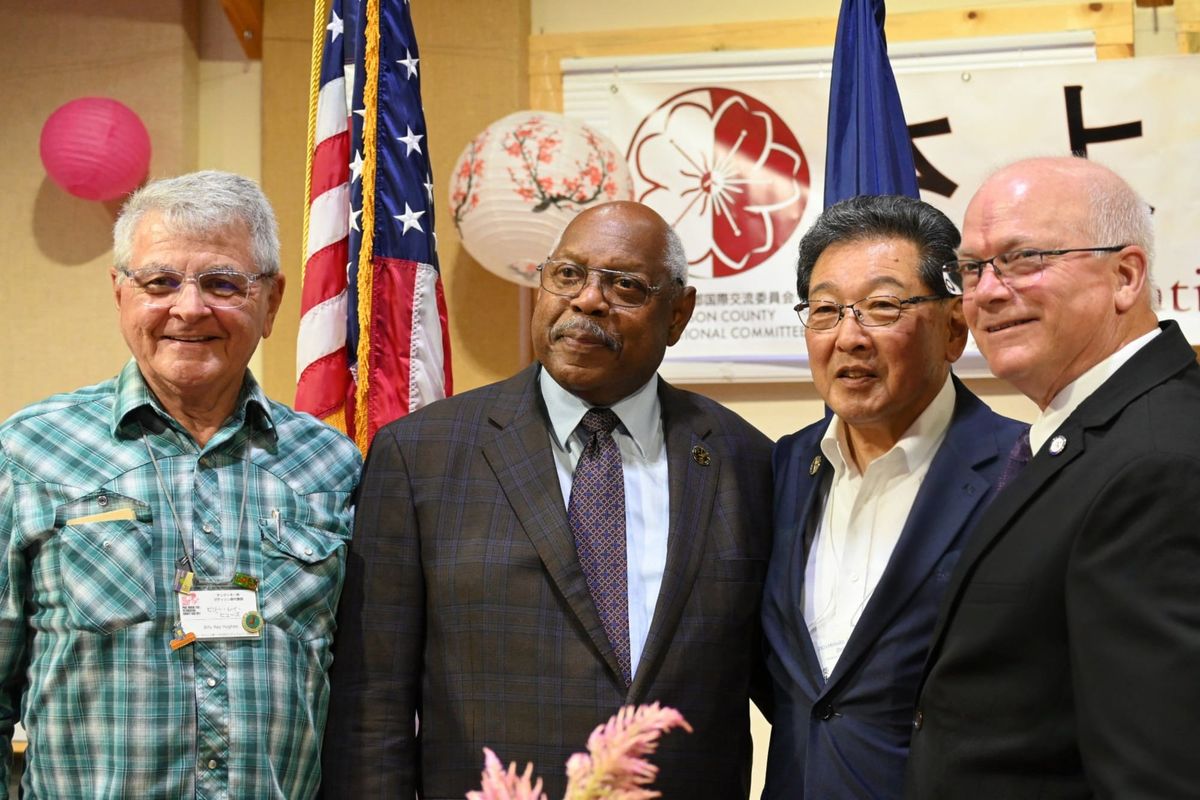
BEREA—Last week, county and municipal officials and employees, as well as local residents, joined with a delegation from Hokuto City, Japan, to recommit the declaration of mutual friendship between the international jurisdictions. A farewell ceremony held at Berea's Acton Folk Center followed later that evening.
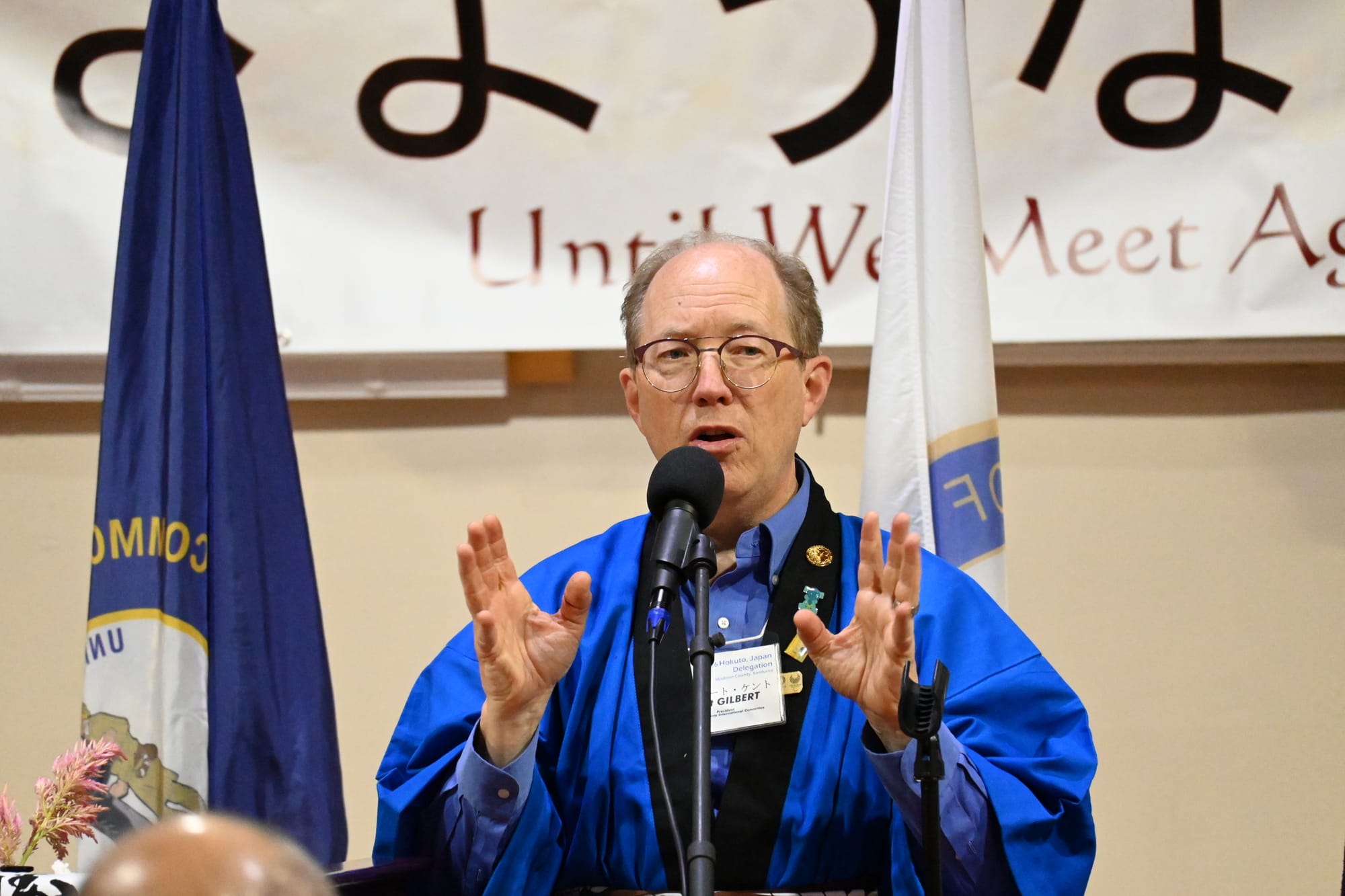
The Japanese delegation spent five days touring the region after arriving in Berea on Oct. 2. However, several delegation members caught the flu and had to spend part of those five days in their hotel room, according to Madison County International Committee President Rev. Kent Gilbert, who spoke during the ceremony.
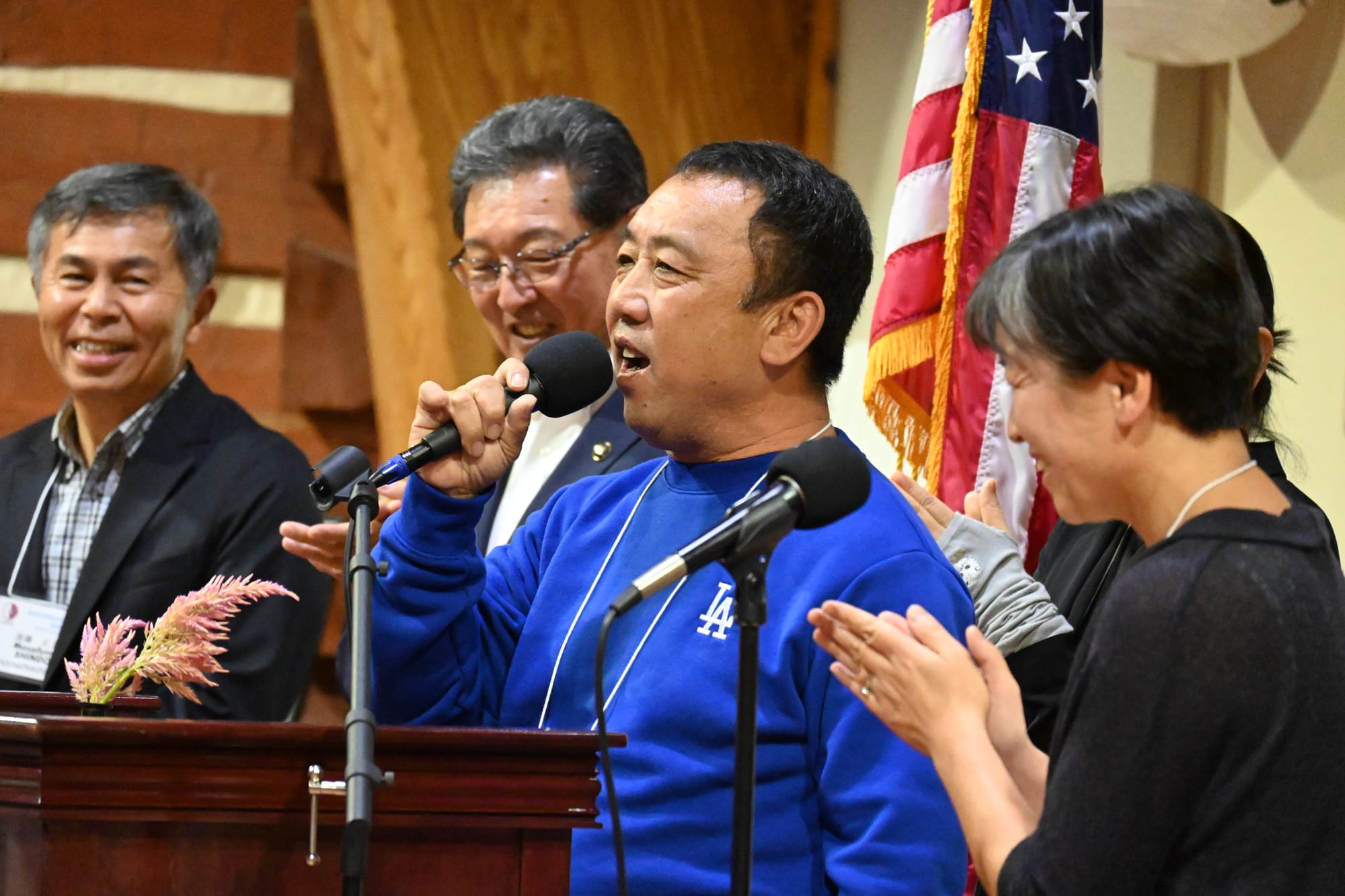
Some highlights of the night included the performance of a Japanese song by the delegation, and a group sing of My Old Kentucky Home and Amazing Grace. The latter is one of Japan's most popular songs, Gilbert told The Edge.
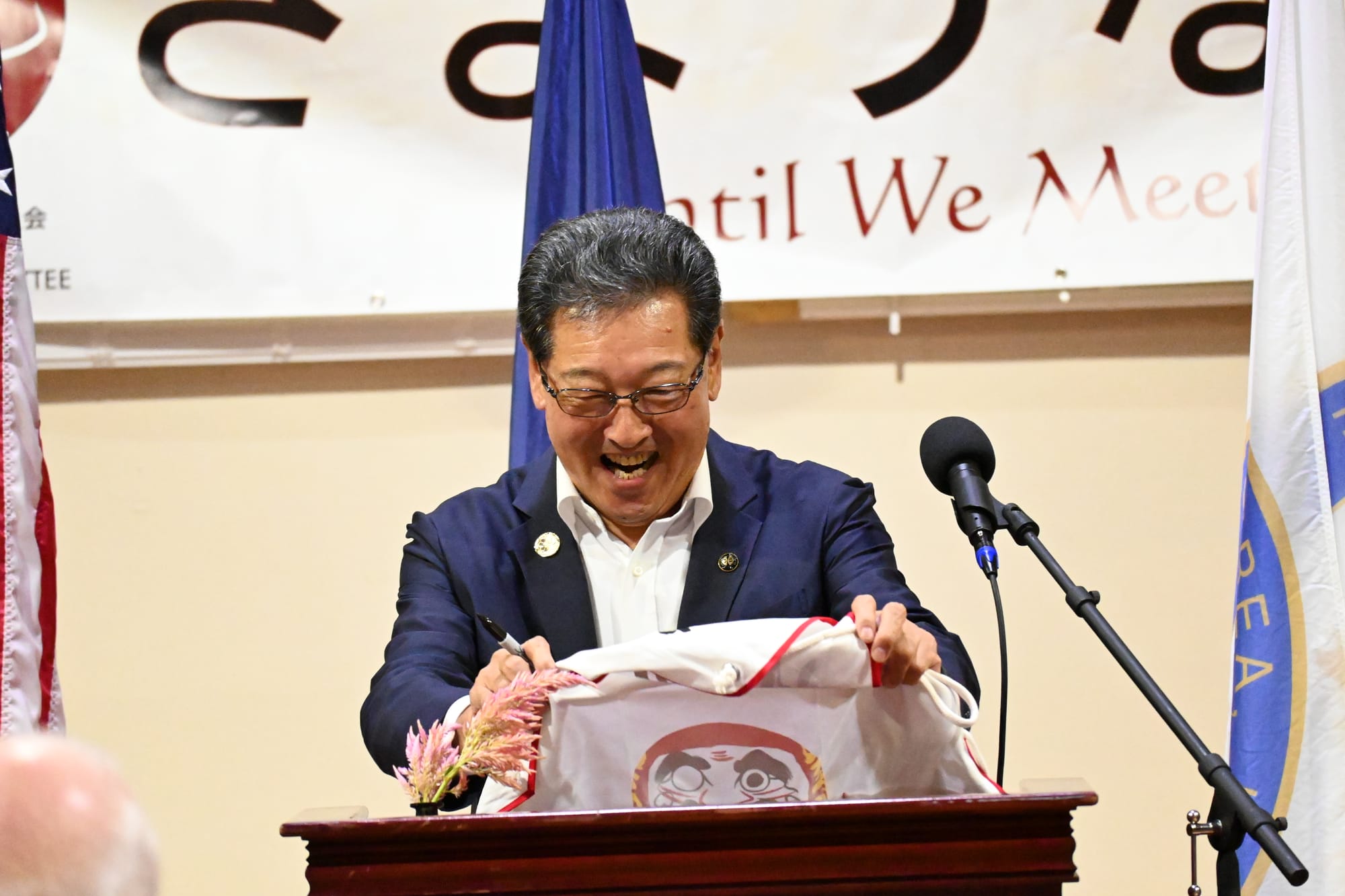
There also was an auction for an apron featuring the delegates' signatures and a picture of the Japanese Daruma doll on it. Per tradition, a Daruma doll is missing one eye which is to be filled in when a dream comes true, Hokuto City Mayor Kunihiko Oshiba said. He drew in the doll's second eye to symbolize that his dream of visiting Berea was fulfilled, he said.
“We will never forget these memorable days,” Oshiba said, according to his translator. “We enjoyed the beautiful nature, the rich local historical culture, and most of all your beautiful smiles.”
The apron was sold for $70, which went toward a Committee scholarship that funds the student exchange-program.
Post-war starvation led to exchange program
The relationship between Berea, Richmond, Madison County, and Hokuto City began 39 years ago when a delegation from Takane, Japan visited the US in 1987.
Takane Mayor Masatami Shimizu wanted to establish a sister-city relationship in honor of Paul Rusch, a Kentuckian from Louisville who in 1938, founded the Kiyosato Educational Experiment Project (KEEP), an Episcopal ministry, on the slopes of Yatsugatake Mountain, near Hokuto.
Shortly after, during World War II, Rusch was arrested by Japanese soldiers and deported as part of a prisoner exchange between the US and Japan.
After the war, Rusch returned to the mountain town in the Yamanashi Prefecture, where he found the locals starving, according to Gilbert. Rusch resurrected KEEP, turning it into a center for rural development and agricultural innovation to help feed the community and teach them modern farming techniques.
"Paul Rusch returned to Japan and found that the war had decimated this rural area,” Gilbert told The Edge in an interview. “Many of the rural areas were starved so that [Japan's] imperial government could feed the military as it was trying to expand. The people were literally starving, had no doctors, had no hospital, had no food."
Rusch raised millions of dollars to invest in KEEP. Despite the destruction caused by the bombings of Hiroshima and Nagasaki, that history did not affect the relationship between the Japanese people and Rusch, according to Gilbert.
“[Rusch] came back to Louisville and started raising money and said, you have to know these are people. Our governments may be enemies, but the people were not our enemies,” Gilbert said. “I think that really motivated the Japanese people for decades.”
When the Japanese delegation from Takane arrived in Louisville in 1987, they were overwhelmed by the city’s size, according to Gilbert. The delegation wanted to find a city of comparable size to their own for the exchange program. Eventually, they were connected with Martha Conaway, an EKU professor who suggested the City of Berea due to similarities between the two towns.
Program renewal
On October 21, 1988, Berea and Takane signed an official agreement to enter into a sister-city relationship and the Madison County International Committee (MCIC) was formed to oversee the partnership between the cities.
Later, Takane would merge with other Japanese towns to form Hokuto City, and the sister-city relationship expanded to a sister-region relationship to include Berea, Richmond, and Madison County.
At a ceremony held last Tuesday morning, Oct. 5, at the Madison County Fiscal Court, Oshiba and local officials signed a declaration marking the program's 39 years and renewing their commitment to the sister-region relationship.
‘More than just pieces of paper’
The relationship between Madison County and Hokuto City is more than just pieces of paper or agreements," Gilbert told The Edge. "In a world where we hear nothing but stories of division and hatred between foreign peoples, this is a shining example of how former enemies have become fast friends," he said.
When heavy rain caused flash floods in Madison County earlier this summer, Gilbert said he got calls from Hokuto City. Similarly, whenever Hokuto City is hit by disasters, such as a typhoon, the Committee contacts officials in Hokuto and tries to find ways to help.
“People are people everywhere. We all love our children, we all breathe the same air, we all enjoy the sunshine when it shines, and we all try to get enough food for the people we love,” Gilbert said. “That doesn’t matter what country you’re in. And those values are what we try to live, not just talk about, in a program like this.”
Sign up for The Edge, our free email newsletter.
Get the latest stories right in your inbox.


