
Barr to KYTC, 'No one told me about opposition to airport road project'
Exclusive report: Congressman who secured federal funds for controversial road project now questions site selection process by state, local officials
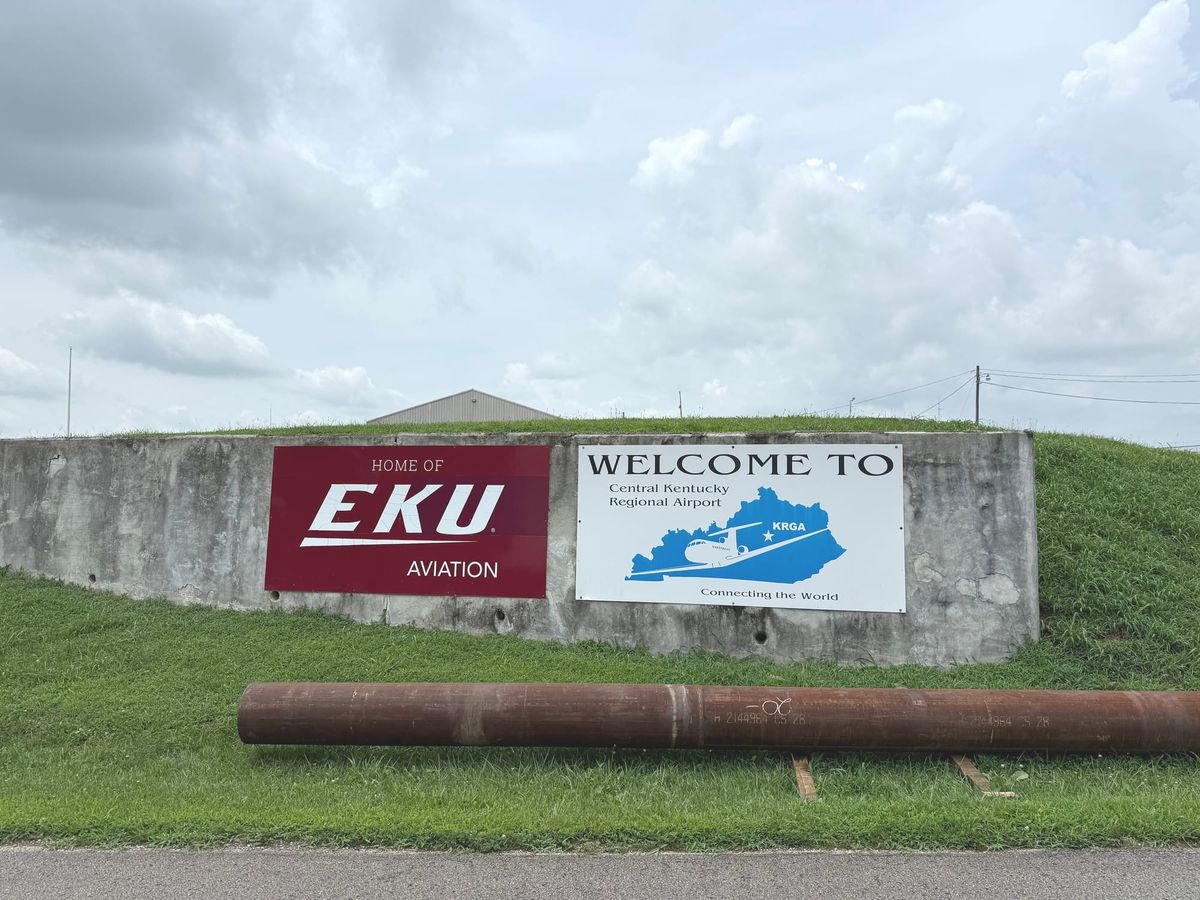
Earlier this month, Congressman Andy Barr sent a letter to Gov. Andy Beshear's top transportation official raising the question of whether her department, along with local elected officials, acted in good faith when making the controversial decision to build a road through a local cattle farm in order to create a more direct route between the county's airport and a state highway.
In the letter, Barr indirectly challenges Kentucky Transportation Cabinet Secretary Rebecca Goodman to prove that a thorough analysis of any and all local opposition to the road was conducted prior to siting the road through the Gabbard family cattle farm.
"[M]y office requires applicants to disclose any land rights issues or similar concerns as part of the Community Funding Project application process. During that process, my office was not made aware of any land rights concerns or objections from affected residents, nor were any such issues raised by the project applicants," Barr's letter to Kentucky Transportation Cabinet Secretary Rebecca Goodman reads. The letter is dated July 21, 2026.
The tentatively named Economy Road project referenced by Barr's letter will connect the county's regional airport to Duncannon Lane/Hwy 2872 by cutting the neighboring Gabbard family cattle farm in two.
Goodman's office responded with an acknowledgement of Barr's letter, reminding him of the site selection process. "During the development of our highway plan projects, the project team takes public input into consideration. An alternative is selected after public input is gathered and considered. Each impacted property owner is involved in negotiations through our Right of Way acquisition process," read Goodman's reply.
Goodman was appointed to fill outgoing transportation secretary Jim Gray in late April of this year.
When contacted by The Edge for details about whether and how KYTC planned to investigate the implications of Barr's letter, and what the recourse might be if so, a spokesperson deflected, saying, "We’re committed to engaging in an effective process to build this highway and help meet the community’s transportation needs while reducing effects on local property as much as possible."
Purpose of road unclear
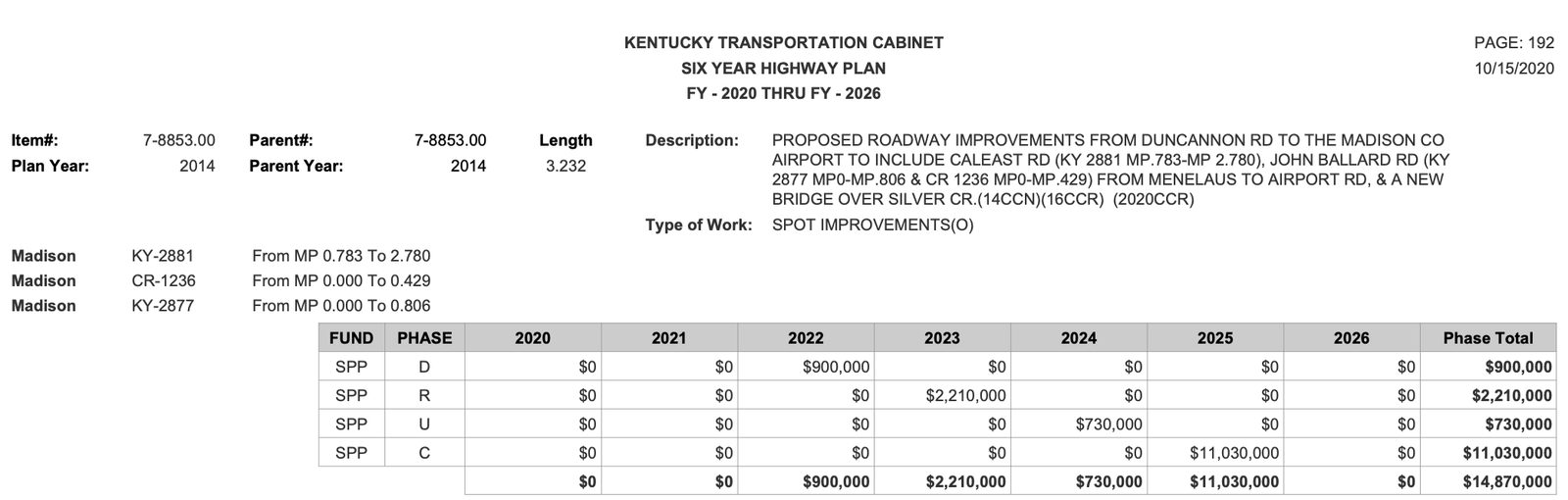
In 2014 when the Gabbards purchased the roughly 150 acre-farm that fronts John Ballard Road across from the regional airport, the state's plan was to conduct spot improvements along that road and on Caleast Road, all the way to where it intersects Duncannon Lane near what is now Exit 83 off Interstate 75.
Whether the road has been prioritized by EKU for its aviation program students traveling to and from the airport, or if its importance is chiefly part of a bigger plan to leverage a portion of the County that has been federally designated as an Opportunity Zone, is unclear. Opportunity zones have special taxing incentives to help promote industrial and other kinds of investment.
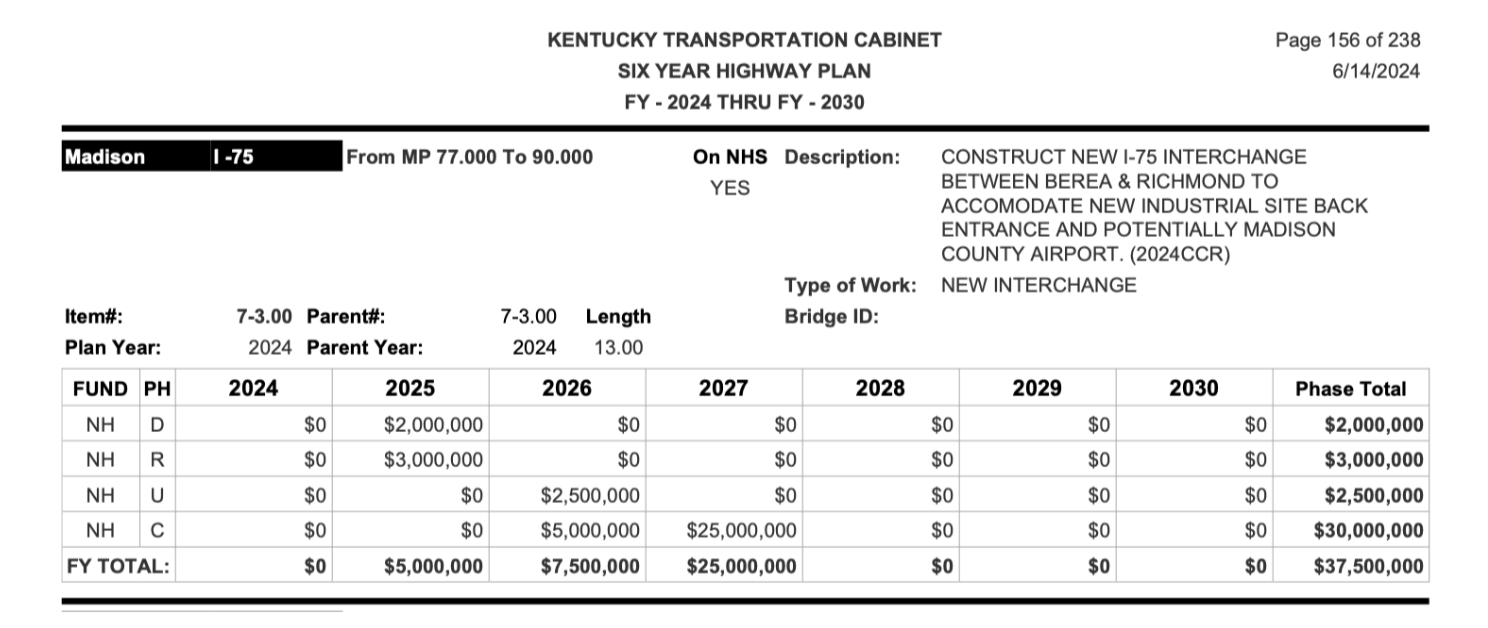
Leadership across EKU and all local jurisdictions have publicly made the case that the road will help both causes. There are, however, already existing routes to the airport from EKU, including Caleast Road, and the newly widened Peggy Flats Road off of southbound I-75 Exit 77, which connects to Airport Road. KYTC also plans to build a highway exit near the airport. EKU has 60 planes for use in its aviation program, so estimates are that between 30 to 60 students per day travel to and from the airport.
Meanwhile, a 2021 letter writing campaign to the Congressman mounted by local elected officials from the Fiscal Court, Richmond, and Berea suggests the push for the road is also about commercial development, although student safety is also mentioned.
Magistrate Tom Botkin refers in one letter to Madison County as a "hotbed" of economic activity and claims the road will contribute to even more development.
“This project will create an unprecedented impact on our community by creating a safe route for citizens, including students of our EKU aviation program, new sites for businesses to locate, an alternative route to ensure commerce continues when delays and rerouting from the interstate occur.”
Scott Gabbard, who farms the property in question, said he'd been hearing about the potential for a road to be built since 2017, but when he checked with the state's highway plan, it said nothing about a new road.
After the 2021 letter writing campaign however, the criteria for the road changed, and by 2022, three options for a new road, all of them through different portions of the Gabbard farm, were put to the public which ultimately chose the one currently planned for development by the state.
"Building a new, direct route from Duncannon Lane to the Central Kentucky Regional Airport will provide a safer, more reliable connection with the least impact to surrounding properties compared to widening existing local roads," the roads department said in its email to The Edge.
'Has community support'
The Gabbards attempted to negotiate a higher offer from the state, especially since the chosen route is to be a 55 mph road that will cut through the western portion of their farm, rendering about a quarter of the property unusable as pasture land, since they will not be able to cross their cattle over the road.
The state said it would not build a cow tunnel for the Gabbards, the Gabbards maintained the state's offer for the 12 acres of easement it wants to take was too low considering the other costs that would be incurred, the state announced it would condemn the 12 acres of the farm, the two went to court, the state won, and the Gabbards appealed. Now, the two sides await an appellate court date, expected to come some time next year.
Barr's letter acknowledges both the EKU aviation program and economic development, but urges KYTC and the signatories to the project to prioritize the needs of the land owners adversely impacted by the development.
"While my office stands by the need to improve safe and reliable access to the Central Kentucky Regional Airport," the letter reads. "I respectfully ask that the Kentucky Transportation Cabinet carefully consider the views and concerns of impacted land owners, as well as any alternate routes or solutions that could achieve the goal of improving the airport access while resolving resident land rights concerns that have arisen as the project evolved."
The transportation cabinet responded in its email to The Edge, "In any transportation project, we understand some property owners may have objections, it does not mean the project lacks community support."
Federal criteria in question
In the local officials' request for funding, completed by the Fiscal Court, the total amount of the project is listed as $15,275,000. In their petition of Barr for help to build the road, local officials asked for $13 million. Barr secured $5 million. The state is expected to cover the remaining $10.3 million.
For federal funds to be appropriated to community level projects, certain criteria must be met. At issue seems to be whether the project met all these criteria. First, there is the question of whether there is any local opposition to the project. The Fiscal Court answered there was, "None."
The Fiscal Court then went on to describe the project as "a highly supported and collaborative project that has been part of a bigger strategy of investing in Madison County’s largest federal Opportunity Zone." Among the components of that strategy was listed, "open[ing] up business opportunities for companies looking to locate in the area.
Unknown influence
"I still do not know who really wants this road," Scott Gabbard said in an interview. "And I have racked my brain trying to figure it out. Whoever it is wants what is rightfully mine," he said. "There are other routes to get to the airport, but someone wants perfect access."
Eminent domain law is Constitutional, but ever since the Kelo v. New London Supreme Court ruling of 2005, where in a split decision, the justices ruled that a waterfront property in Connecticut could be seized for development, there has been debate surrounding how to address what the dissenting opinion, written by the late Justice Sandra Day O'Connor, warned would be the increased transfer of private property from one owner to another who has more influence.
"Under the banner of economic development, all private property is now vulnerable to being taken and transferred to another private owner, so long as it might be upgraded—i.e., given to an owner who will use it in a way that the legislature deems more beneficial to the public … The beneficiaries are likely to be those citizens with disproportionate influence and power in the political process, including large corporations and development firms. The Founders cannot have intended this perverse result,” wrote O'Connor.
Based on the evidence heard in Madison County Circuit Court, Judge Kristin Clouse ruled that the state's taking in the Gabbard case was in the public—not the private—interest, although she noted later that her ruling was based on case law, not her personal preferences.
Public interest lawyer and eminent domain specialist Robert McNamara of the Institute for Justice in Arlington, Va., meanwhile, noted in a previous interview with The Edge that, "Eminent domain doesn't happen to wealthy people."
Next steps
The Edge contacted Barr's office to ask what prompted him to request the state transportation cabinet look back on a project.
In an email response, a spokesperson for the Congressman repeated what was stated in the letter, saying only that, "Congressman Barr supports improving transportation access to the Madison County Aviation Program, which is why he secured federal funding for the project. Congressman Barr has also asked the Cabinet to carefully consider the concerns of impacted landowners and any alternative routes while advancing the project.”
When asked what steps the Congressman's office would take to ensure any necessary follow up on behalf of KYTC, the spokesperson referred a reporter to the state transportation cabinet.
"The project incorporates input from state and local officials, residents, and business owners," the KYTC spokesperson wrote. This is a developing story.
Sign up for The Edge, our free email newsletter.
Get the latest stories right in your inbox.